
Featured Exhibitions
Bird i’th Hand
Jennifer Aldred, Clive Hodgson, Graham Lister and Daniel Pettitt
A_Place Gallery
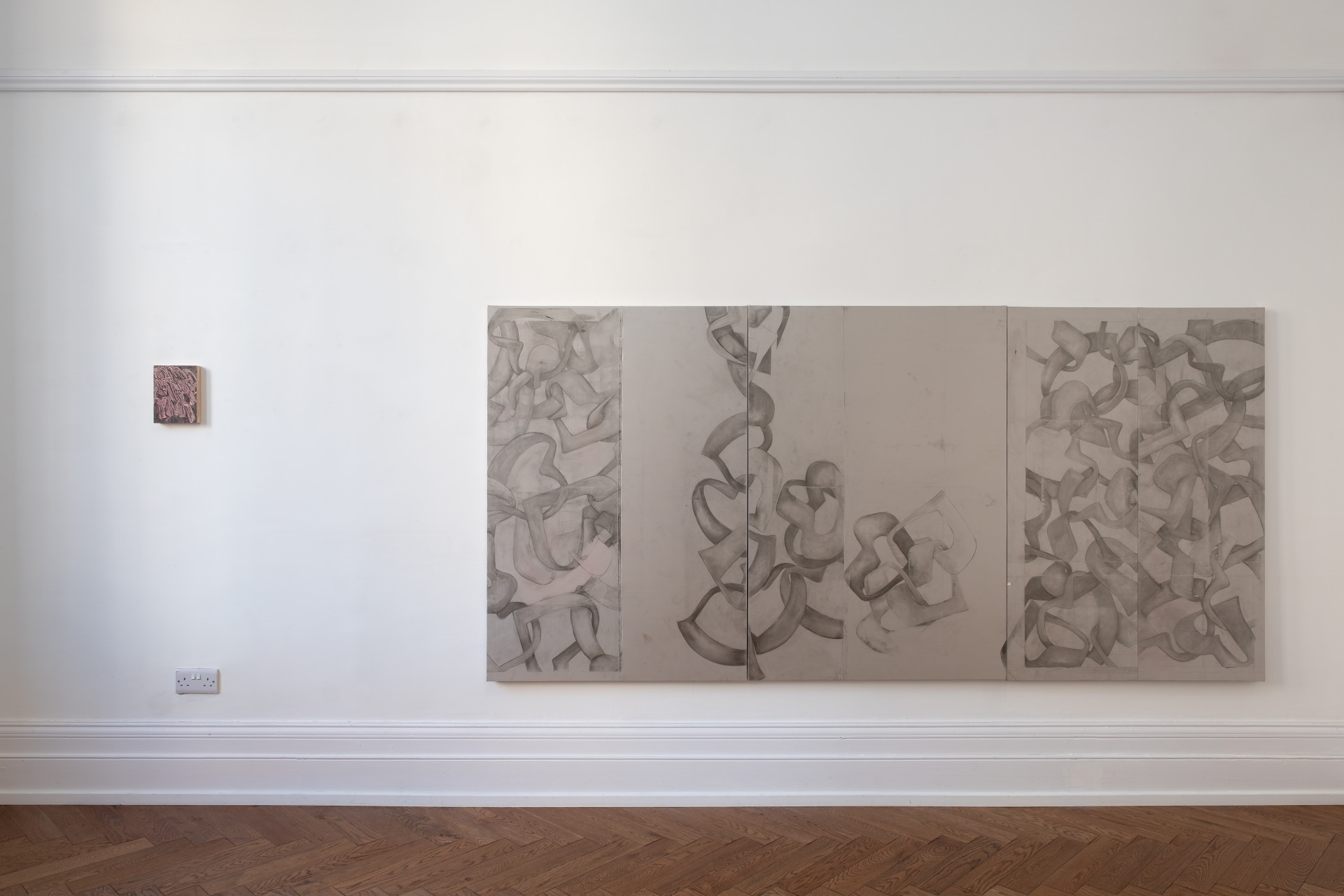
Installation view, Bird i’th Hand, Jennifer Aldred, Clive Hodgson, Graham Lister and Daniel Pettitt, A_Place, 2026
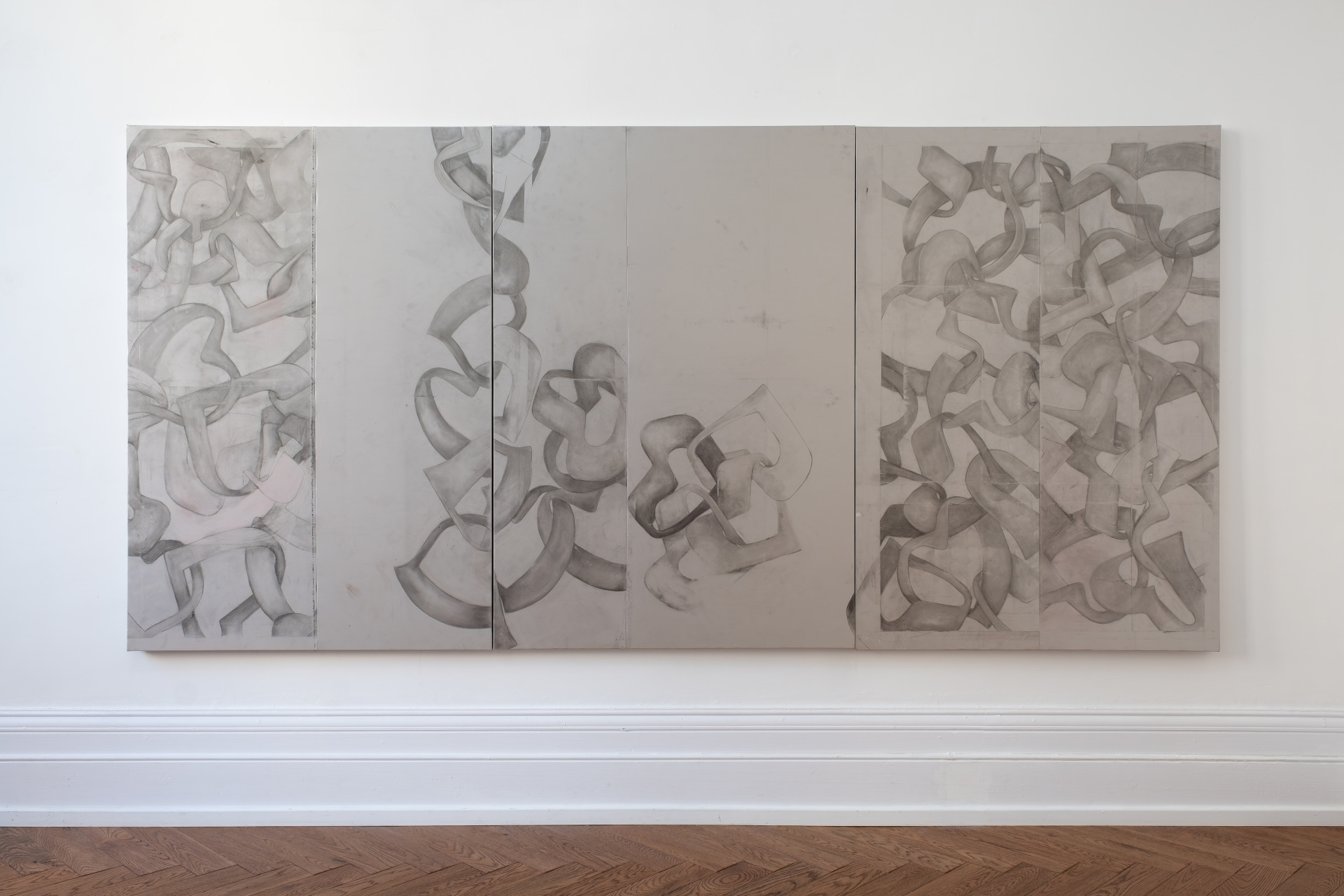
Jennifer Aldred, Placeholder II (2026), graphite on PVC, 130 x 270 cm
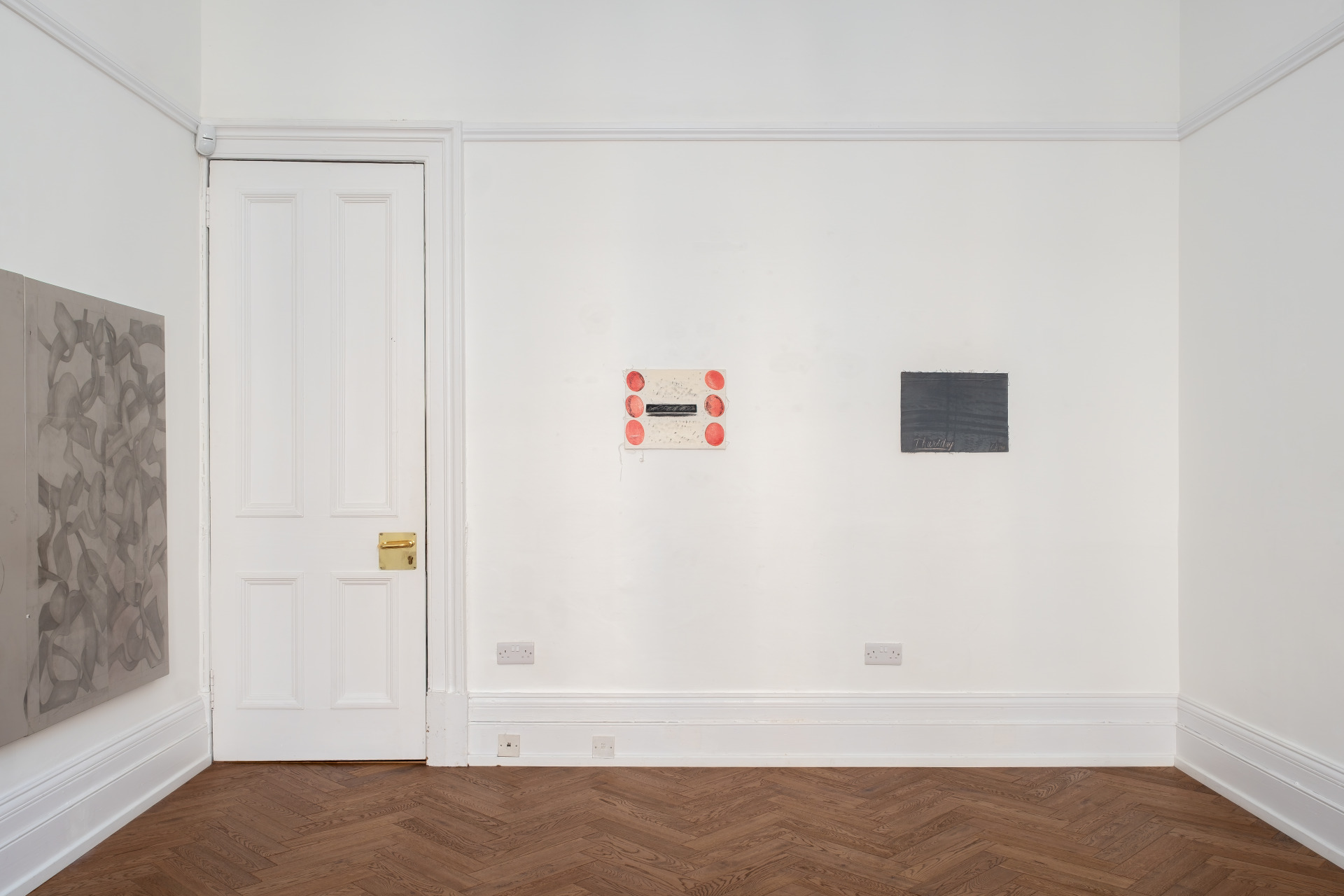
Installation view, Bird i’th Hand, Jennifer Aldred, Clive Hodgson, Graham Lister and Daniel Pettitt, A_Place, 2026
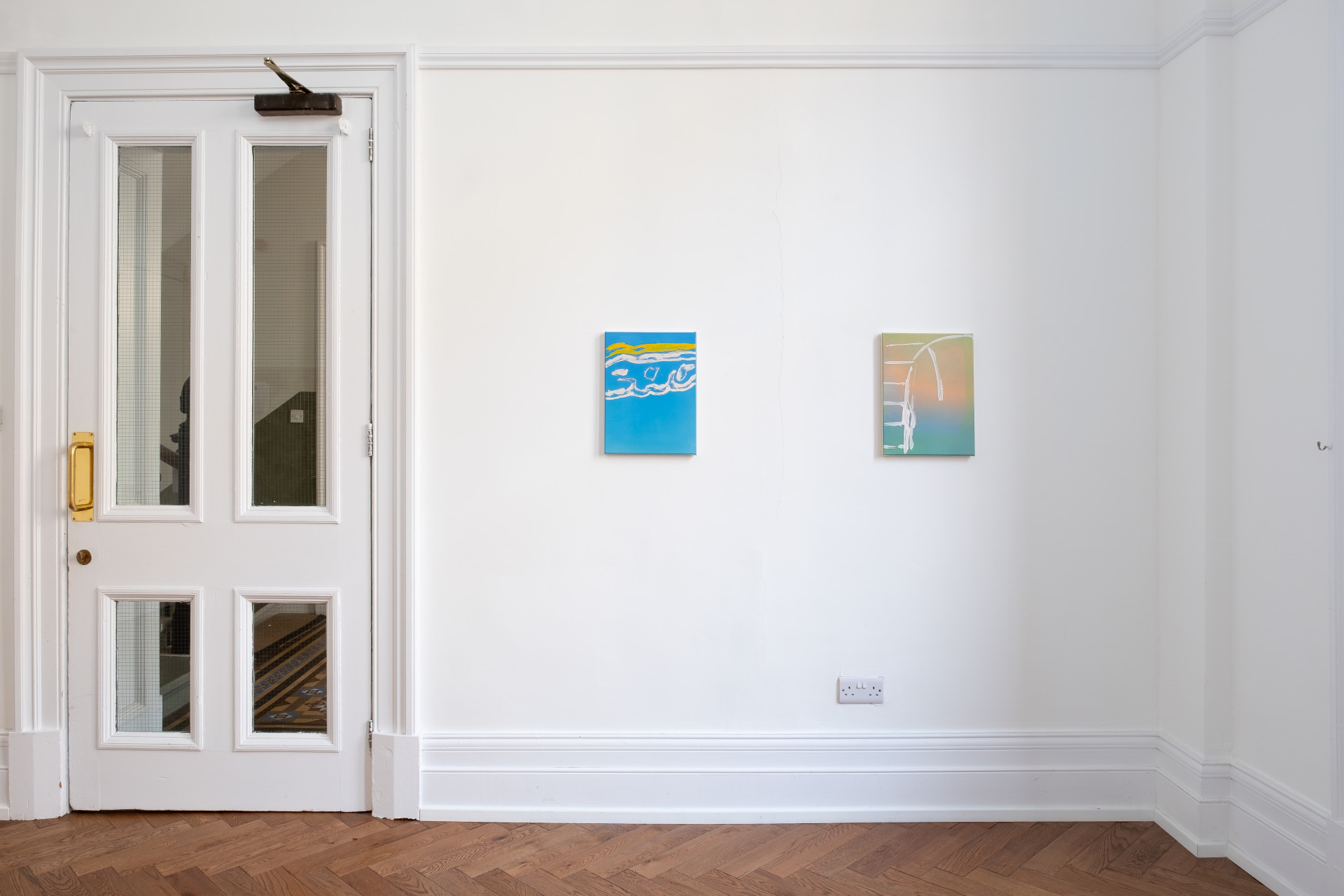
Installation view, Bird i’th Hand, Jennifer Aldred, Clive Hodgson, Graham Lister and Daniel Pettitt, A_Place, 2026
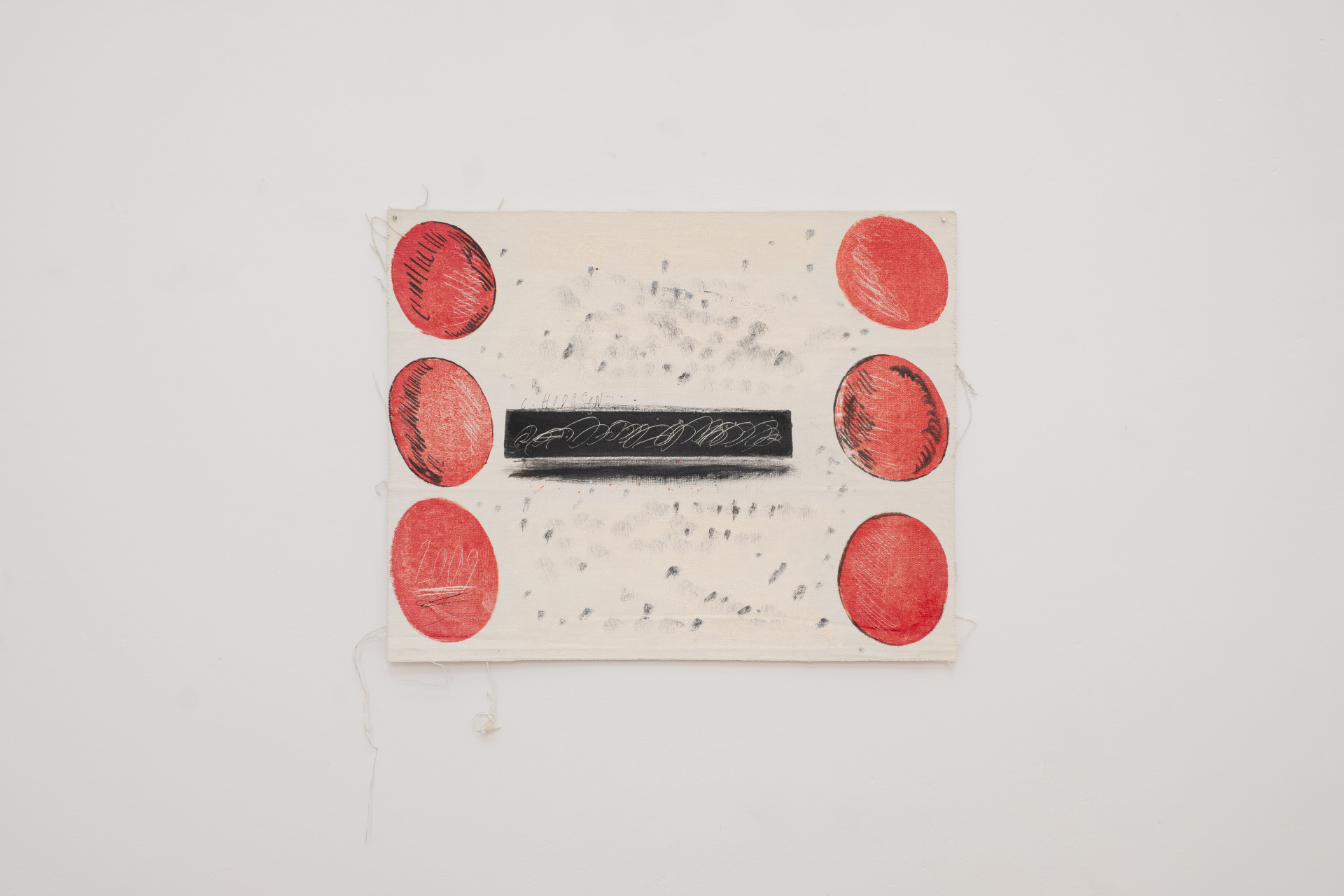
Clive Hodgson, Untitled (2009), oil on canvas, 32 x 40 cm
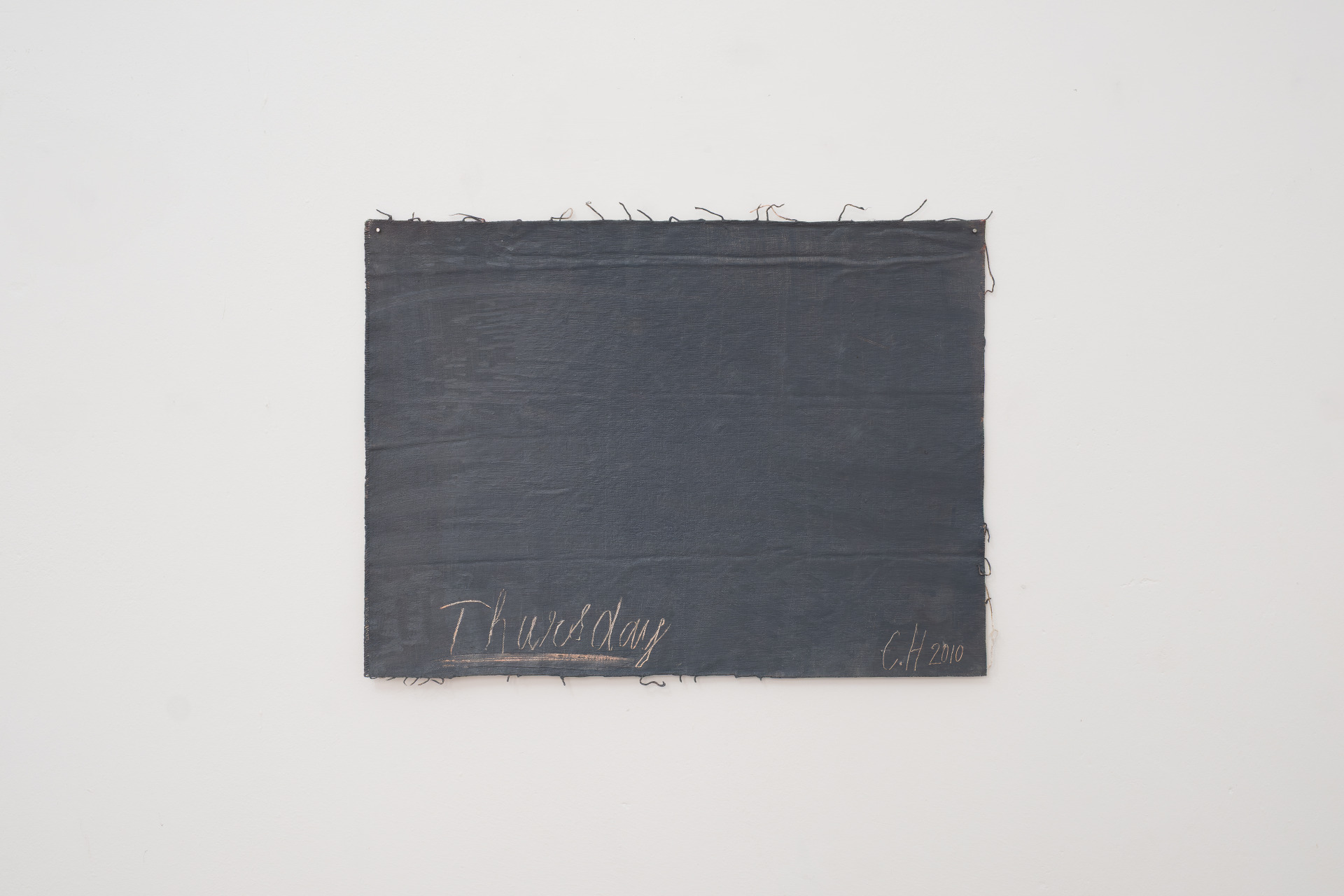
Clive Hodgson, Untitled (2010), oil on canvas, 32 x 44 cm
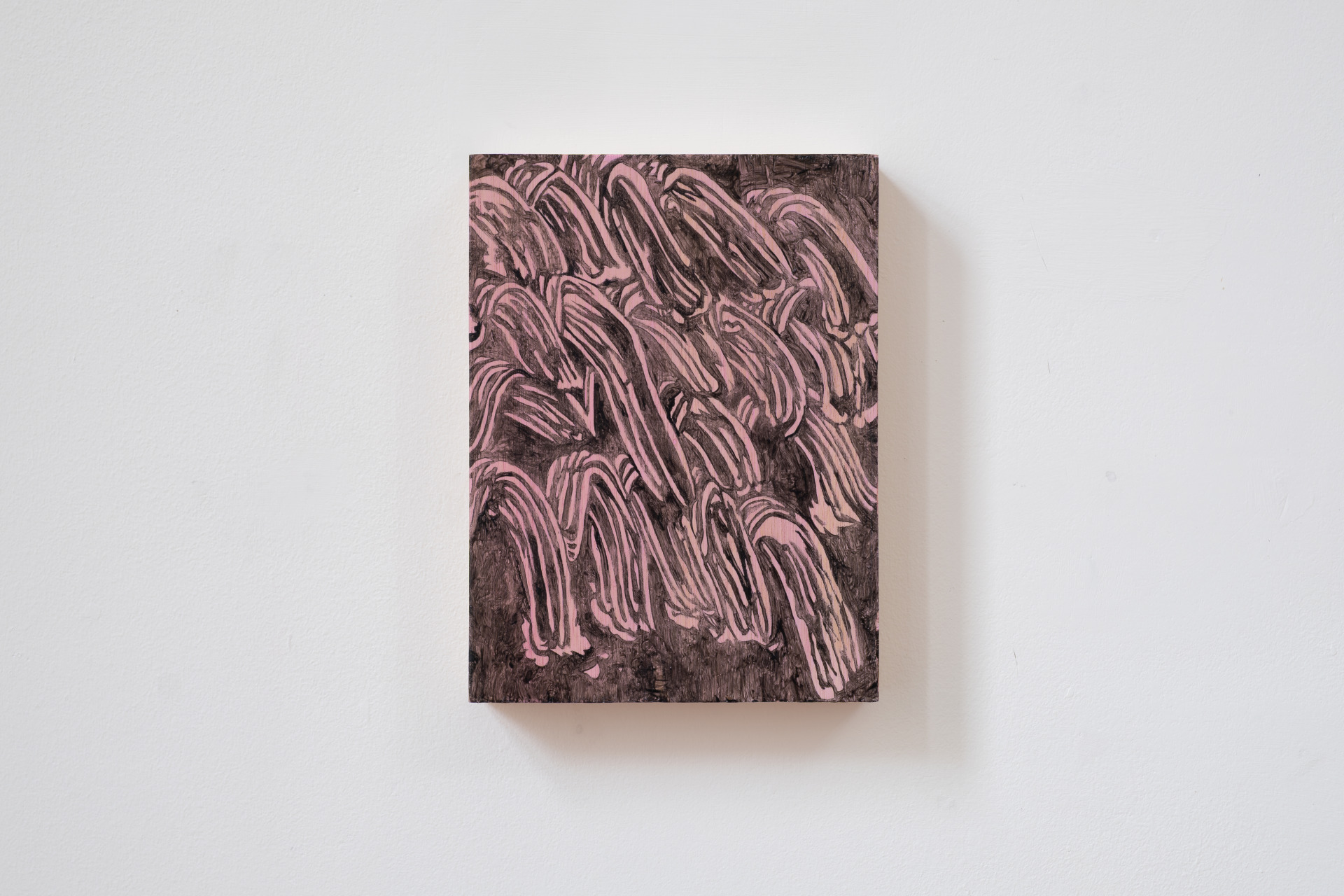
Graham Lister, Waterfalls (Pink) (2026), oil on plywood, 20 x 15 cm
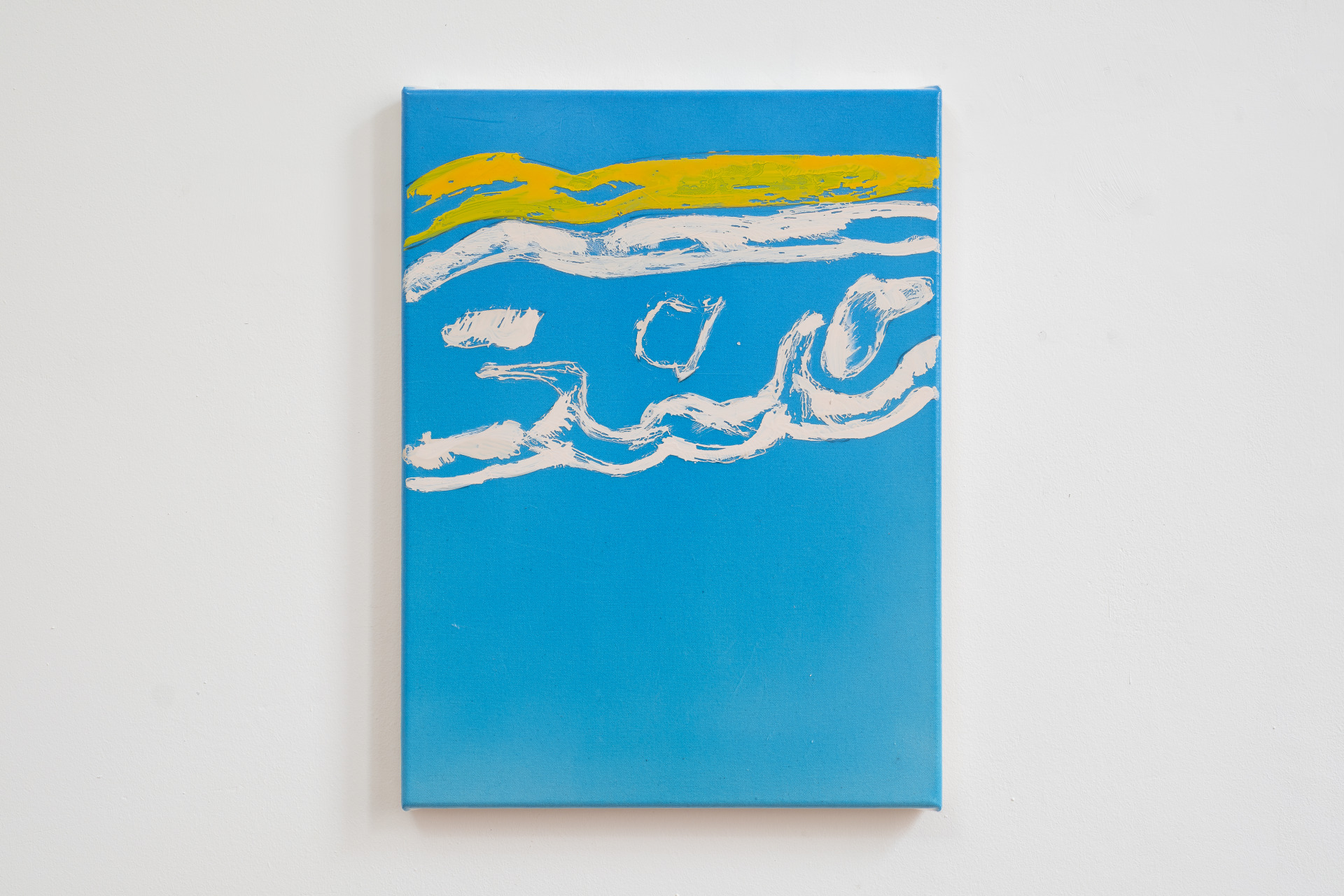
Daniel Pettitt, Crop Rotation (MM) (2026), acrylic on canvas and plastic, 40 x 30 cm
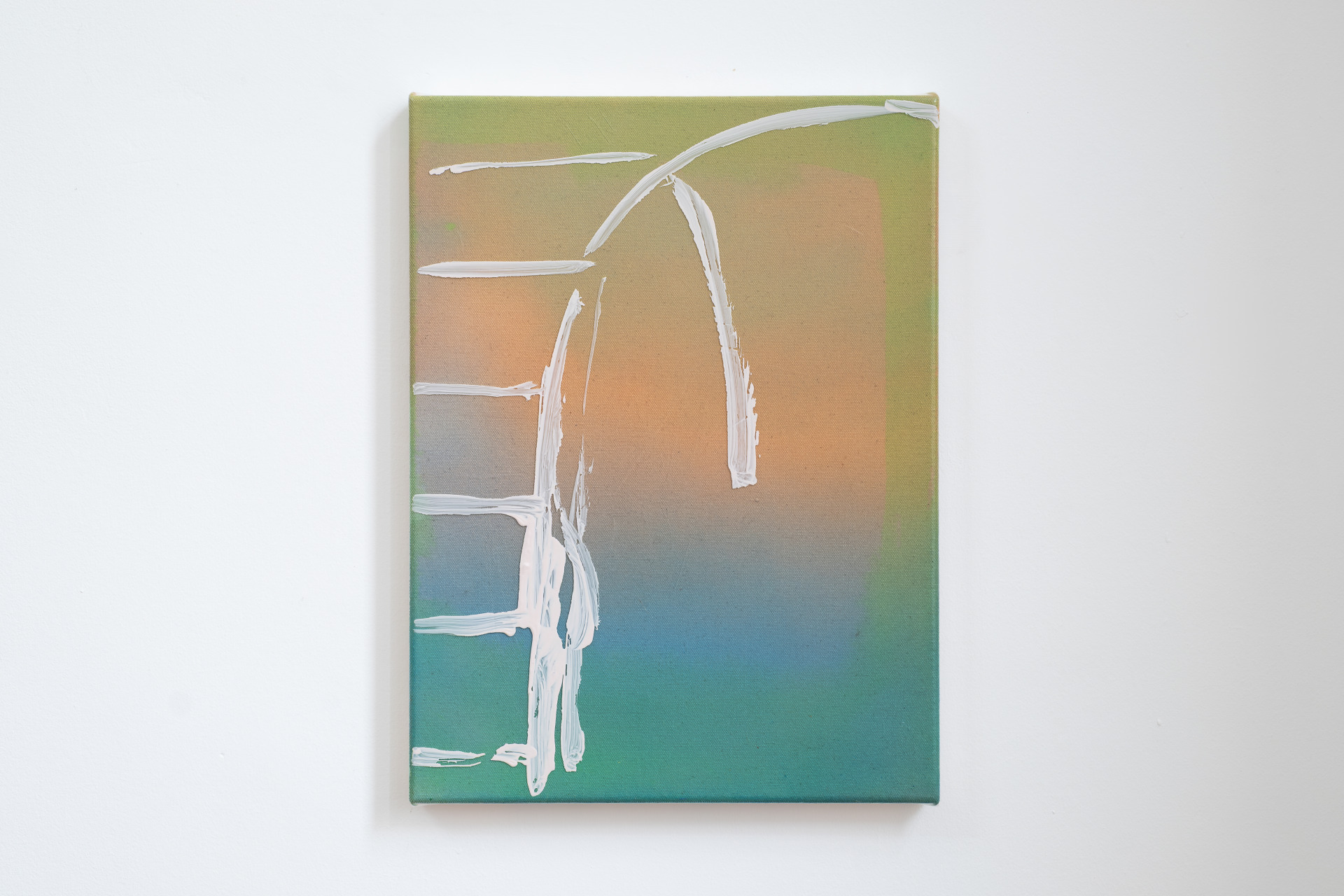
Daniel Pettitt, Crop Rotation (September) (2026), acrylic on canvas and plastic, 40 x 30 cm
Bird i’th Hand
Jennifer Aldred, Clive Hodgson, Graham Lister and Daniel Pettitt
A_Place
17.09 – 01.10.2026
During a jazz band rehearsal at school, we were told by the band-leader “only you play trumpet the way you play trumpet”. (You have to imagine this line being delivered in a heavy Brummie accent. It adds to the effect). It stayed with me over the years, not really in relation to my trumpet playing – those abilities, sadly, are lost – but in relationship to art-making and painting in particular. At points I have questioned this sage wisdom. Surely spotty teenagers don’t possess some inherent unique tone to their trumpet playing in the same way as, say, Miles Davis. But over time I decided to take the band-leader’s aphorism on trust – he was, after all, a former session-musician on some Take That records.
Perhaps the ‘hand’ of the painter operates in the same way, containing a distinctiveness that results in a visual language that is in some way unique to only that artist. The desire to reach for a particular range of colours, the instinctive decisions when arranging space, the handling of paint, line, mark, shape, material. These things in their infinite complexity and variability make up the artist’s visual ‘identity’.
Within this though is also a certain kind of anxiety. Artists themselves are often in the worst position to see their own hand in things and the process of making art is mixed up with worry that things either look a bit too much like somebody else or the failure to replicate the visual effects achieved by other artists.
All of this leads me to the phrase “a bird in the hand is worth two in the bush”. Or rather, I arrived at the phrase when I remembered the names of some pubs I knew of in the Bolton area, wondering what they meant. Bird i’th Hand is a rendering of the saying particular to the regional accent and dialect of where I grew up in the North West of England. It speaks of the colloquial, the local, the particular. It adds an extra layer of meaning to the saying, which already speaks of possession, identity, the value of what you hold – and the tension you feel when you want to reach for something more or ‘other’ than what you already have.
Artists are (should?) be in the business of being somewhat unsatisfied with things as they are. The world is not enough. But this endeavour can only be carried out using what is known and possessed at present – the bird in the hand, the manner, sensibilities, style, substance, whatever. And so in that sense what the artist already has is also infinitely more valuable than the promise of what lies just outside of their grasp.
This exhibition brings together four artists who, in their own way, work with abstraction, gesture, touch, repetition, decoration or words (both legible and illegible) to probe at what an authentic visual language looks like and how to grasp at meanings that are on the periphery of intelligibility.
Jennifer Aldred works across drawing, painting and photography, often with glossy and contingent materials. Her work is concerned with legibility and how meaning becomes attached to things, often in unintended or casual ways. Her work plays between meticulous rendering, repeated images and the barest traces of incidental marks, making the viewer question where intentionality begins and ends.
Clive Hodgson’s signature paintings double up ideas of the artist’s identity, playing with the signature existing on top of, within or behind the ‘painting’ in its more conventional sense. His signature is signing off what is already his signature, his hand at play in the work itself. Along with the year or sometimes even a day of the week, each of his paintings is like a letter, his body of work a lifetime of correspondence.
Graham Lister’s paintings are an obsessive investigation into the nature of what constitutes a ‘mark’. Often they are blown up reproductions of repetitive sketchbook drawings, or reproduced paintings of marks from other paintings, painstaking renditions of what in other instances are quick, off-hand gestures. But his works are not interested in merely programmatic reproductions of other existing marks he has made, rather how they are instead re-interpreted as complex abstracted images.
Daniel Pettitt’s paintings often take language as their starting point, using spare and immediate gestures to severely abstract the textual source material. They suggest shopfront signage, logos or billboards half remembered, passing as a blur, seen through a rain-streaked window. His use of plastic around canvas creating a separation between lush gradient backgrounds and the slickness of intensely off-hand gestural marks on the transparent wrapping. They invoke branding, product design and collector’s items pristinely preserved in their packaging which all plays off against the involved nature of the artist’s hand in their making.
– Samuel O’Donnell
Photo credit: Samuel O’Donnell