
In the Studio
In The Studio: Celine
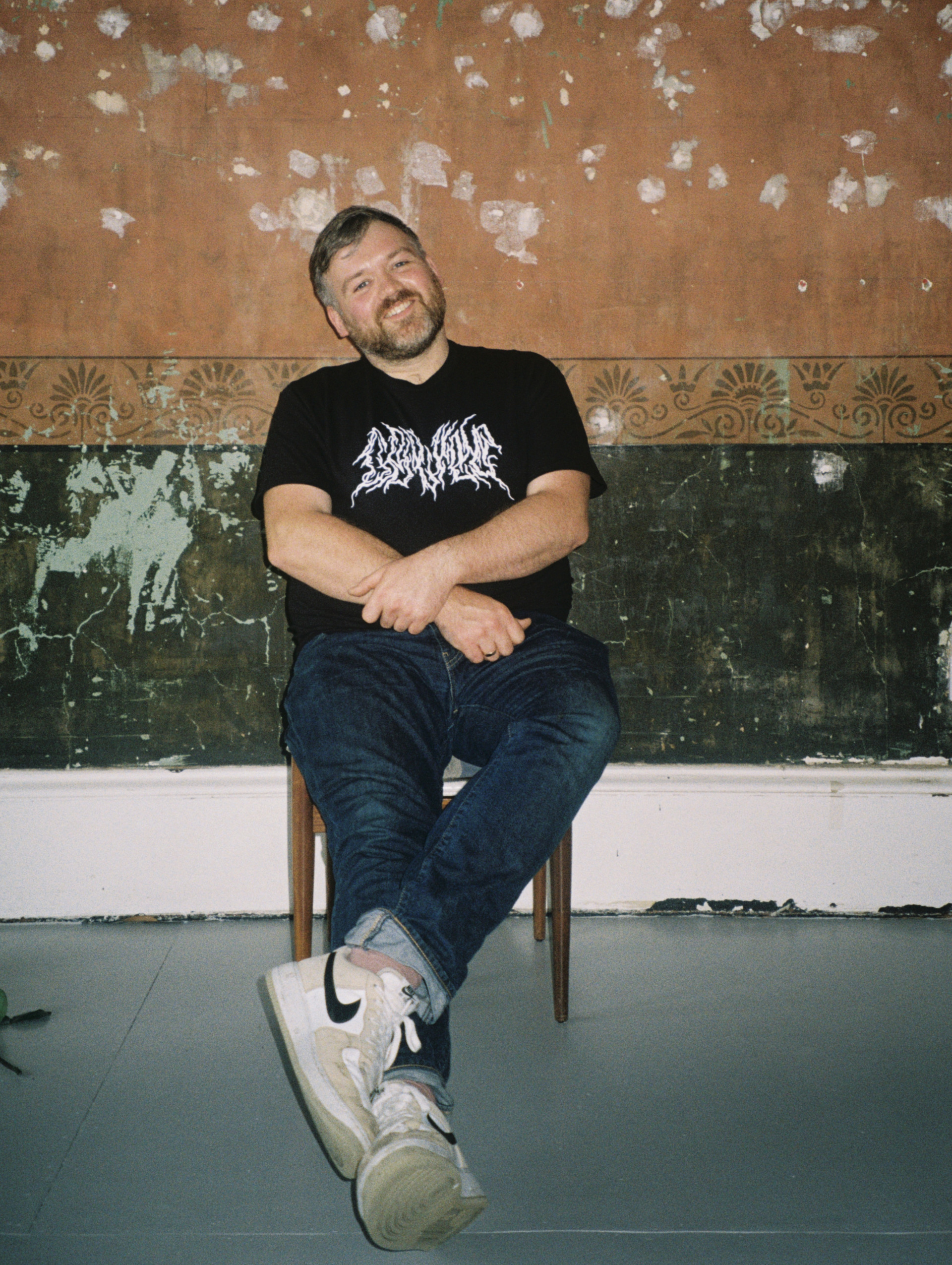
Celine is an artist-run exhibition space in Glasgow established in September 2015 by Michael White (b. Kilbirnie, Scotland), Adam Lewis Jacob (b. Poole, England) and Céline Amendola (b. Lausanne, Switzerland). It is run by Michael White and Celine Amendola from White’s home in Govanhill. On the occasion of Glasgow Art Weekend, and two weeks into the gallery’s final show at 493 Victoria Rd, I sat down with Michael to reflect upon the last ten years of the Celine project and to talk about what comes next as he prepares to move back to his small hometown.
Can you talk me through the origins of Celine? How did the project come to be? How did Glasgow’s landscape lend itself to you creating this gallery in your home?
It was a long time ago now. 2015. We moved into this flat on Victoria Road in 2013. There were four of us originally. We were all art school graduates or adjacent. It was me and Jamie Clements who moved in first. Because it’s a four bedroom flat, we got two guys that were moving up to do the MFA, which were Adam Lewis Jacob and Alex Rathbone. Before Govanhill was cool, it was not a place that a lot of people wanted to live. When you went into the pubs, there were still old men in the old men’s pubs. This flat had lain empty for a long time so it was really cheap. You only really get deals like that if you’ve kicked about in a city for a while.
After two years, Jamie moved out, Alex moved out, and it was just Adam and I. He was finishing his MFA when Céline Amendola moved in. She arrived from Switzerland. She was going into her second year in the MFA. Adam and I were aware of the fact that we had so much space and had independently considered this idea of utilising it in this way. With Céline moving in around that time, it made sense for her to get roped into it. The triangulation of me being Scottish and based in Glasgow for a while, Céline being Swiss, and Adam having done the MFA and moved up from down south meant we had a good spread of potential people that we could ask to do shows.
It’s funny because we are at this point in Glasgow where it feels, at the institutional level, less dynamic than ever. The big spaces are doing less and less shows all the time, CCA has closed, so on and so forth. In a way, the city was in better shape ten years ago, but even then, it felt like we were entering a period of decline. Part of that relates to the fact that it is artist-run and thinking of my own trajectory as an artist. It was clear that opportunities here were narrowing and narrowing, especially as you exit the ‘new graduate’ space. Any kind of action that I was getting as an artist was abroad. I ended up going to Canada, Argentina, and Zimbabwe. The fact that you feel that narrowing in your own city, it’s that kind of thing where if you start a space here, even if it’s by invitation only, that becomes one more space on the circuit. Through this, you’re making your own space at the table in terms of shaping the cultural diet and landscape. That became more apparent as the project endured and we started to develop a voice and respect within the city. There is a generosity and reciprocal nature in it. Having space, being able to give up your time, but not being able to offer any financial resources. Maybe some practical resources. There’s a mutuality in how shows came about here.
Speaking of this voice and invite-only format, how would you describe Celine’s curatorial style/focus over the years? Thematically, what is the through-line?
I remember saying this to quite a few people about five years ago. When developing a voice or trying to identify a throughline, you don’t start with the view of it lasting ten years or the idea that it will have a legacy. That emerges as you get deeper into the commitment of running the thing. You start off and think you’re doing alright, then you develop more confidence and become more ambitious. You start to understand the nuances of the space and notice your audience developing, then you get to a point where certain shows make you realise you’re hitting your stride. Where you think now I really know what I’m doing, whereas before, I was playing at it. Then a year or two later, you have the same sensation. That’s an interesting thing because at the end of the day, you’re feeling your way through it, but at the same time, reaching about in the dark. From my own experience, I had been finished art school for six years, I did shows quite a bit in Scotland and abroad, worked as an assistant for other artists, did tech work for places like Tramway and Inverleith House. Through that, a curatorial position is informed by a pragmatism when it comes to what you’re doing, who you approach, how you approach and what’s possible in the time you have to dedicate to the thing. It comes from years of doing other peoples shows in different capacities. The funny thing about being a tech is that you end up being the guy on the ground between the curator and artist negotiating practicalities. So there was a wealth of experience that I had acquired from having different roles within the art world that helped to shape it.
Because we don’t have that funding or strict calendar that comes with getting funding from Creative Scotland, it meant we were also allowed a bit of agility. The recent show with John Wood came about by chance. Steven Grainger, who curated the show, was working with John and showed us the work without the intention of putting it on. When I saw that, I thought ok there’s this body of work just sitting in a guy’s house. It’s photography. Nothing needs to be printed, we just needed to work out how to hang it. What started to emerge for me was trying to take a position that challenged prevailing tendencies in the Scottish curatorial landscape where contemporary art is concerned.
There is a bit of thing in Scotland where, once you’ve had your shot, you’ve had your shot. Unless you’re working with a gallery outside of the city, or have significant ties to another city, you end up marooned. We can’t really do anything about that as one space, but it causes me to think about the sustainability, or lack thereof, attached to that. I wanted to start making more anarchistic choices. Ten years is a long time and it’s not. With that longevity, you get to be the gallery that makes the call on things. Other galleries require things to be validated. Because we’ve endured, we’ve become the person who takes a punt on the things other people haven’t. That starts to appear that you have a cool program, but its as simple as dont fucking do what other people are doing. Part of that was working with older people that haven’t had a show for a long time or had never had a show at all.
This is the difference between being an artist and a curator. You see an inherent quality and value in something where you’re not waiting for other people to validate it. That lends itself to a degree of ambition.
A few times we’ve approached people we’d never met before and our Carole Gibbons show was like that. I knew of her work because I’d been about for awhile and she had a bit of a rep in the seventies and eighties. I’d seen a piece in The Hunterian that had been curated into Charlie Hammond’s show. I saw that and thought, this is a good piece of work, what does the proper show look like. I did some digging and there hadn’t been a proper show for about twenty years or more. I was trying to attend to the issue of people being forgotten or neglected.
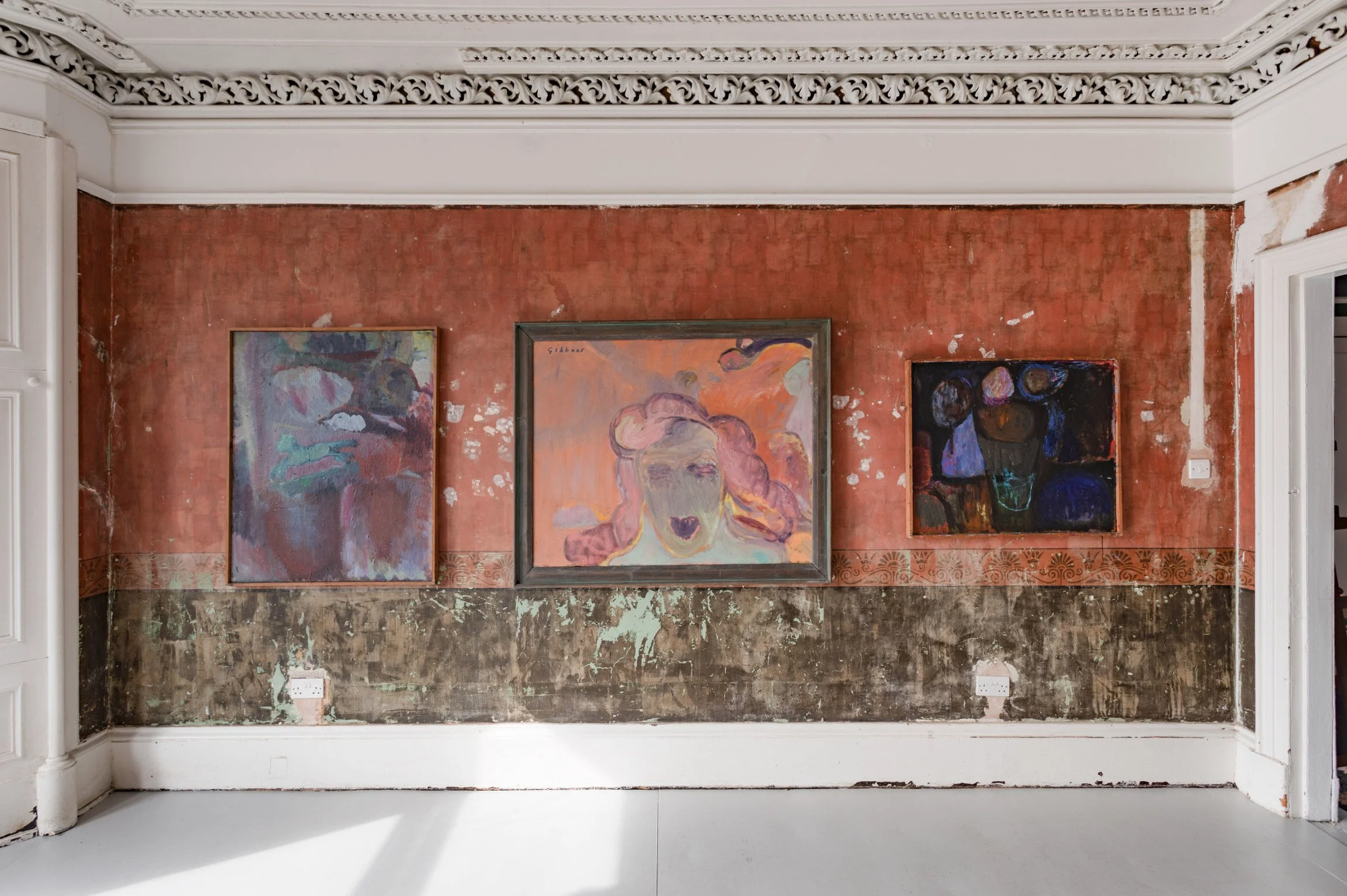
Carole Gibbons, Celine, 2023. Photo: Patrick Jameson.
On the topic of sustainability, what are your feelings about DIY art spaces in Glasgow and Celine’s contribution to that culture?
The silver lining regarding the landscape being worse off than it was ten years ago is that there are more independent spaces now than I’ve ever known of in Glasgow. And I believe that’s a response to that institutional failure. Hopefully some of them turn into something with a degree of longevity. Neil Clements is a good resource because he’s five years older than me and he’s seen so many places come and go. He’s written about how there’s no published memory of those places aside from what his specific references would be.
Yeah, one of the last examples of a published memory would probably be Social Sculpture by Sarah Lowndes?
Yea, and any narrative will be selective. The author will tell the story that they want to tell, but there is this thing with Social Sculpture where a lot of people that were on the scene at the time were critical because of the ‘Glasgow Miracle’ framing. It recorded a very fixed, narrow time in Glasgow. The emergence of The Modern Institute, Transmission having real momentum at the time. It also focused on a very specific group of artists, although I’m sure there was more going on at the time than what was recorded. Within that, and the ‘Glasgow Miracle’ patter, there was definitely a narrative that was a part of my education that was based around art starting in the nineties. There was a generation of artists that developed infrastructure in the city like Glasgow Print Studios, Streetlevel Photoworks, that by the time that these narratives Sarah wrote about were developing, and how that related to Optimo, they weren’t as cool or glamorous anymore. But effectively through a time that was maybe more economically dynamic, but before neoliberalism had really taken hold, a certain amount of real infrastructure was developed by artists who were figurative painters but also really involved in trade unions and had relationships to industry. Steven Campbell, for example, who went to art school as a mature student, but worked on railways before it. It wasn’t sexy and it wasn’t cool, but the narrative of something like Social Sculpture, at a time when the art world changed; art fairs are becoming bigger, galleries are everywhere, is different from how things worked in the eighties where you made art and it was probably shown where you worked. The ‘international, jetsetting artist’ wasn’t so much of a tangible idea.
That independent artist-run activity and diy space thing is a huge part of that story. By the time Celine starts, there’s not really a lot of that activity because that has morphed into institutional legitimacy, like Third Eye Center becoming the CCA, or even Fruitmarket in Edinburgh. That pipeline of artist-run space that then gets Creative Scotland or Arts Council funding and then becomes a professional space is quite tangible. We were very conscious of how that funding model was increasingly becoming like a chokehold. It would mean I wouldn’t be able to do something like a John Wood show because I would need to have that planned a year and a half out. You wouldn’t have that agility. Now the institutional space is broken down and people don’t really have any outlet other than through independent spaces. Which is good and bad. There’s so many spaces now. I’ve not been to as many as I would like, but I think temporarily people popping up and doing things in their own flats is really really good. Because we started Celine and stuck with it for so long, I do think it became an example to other people. Even if it was just younger people coming through asking to have a show, and I’d be like well I cannae do it but you can just do it yourself.
Can you talk to me about The Apartment: Home as Artspace feature and what getting that feature was like as Celine entered its last show.
The people who made the book, Michelle So and Robin Leverton, contacted me out of the blue. I’d never met them, but they’re based in London. They occupy a space where they were making artwork and curating. They did a sequence of shows in their own flat in London. From that, it grew into this wider research project. One of the things that caught their interest when considering Celine as a case study was because it was one of the longest running examples they had come across when looking internationally.
I’m sitting here talking about how I’ve tried to resist doing things the way other people have done them. I’m conscious of the fact that we’ve taken a deliberately obstinate position, but we still want some kind of validation. What was interesting about the relationship to the institutional landscape is that from very early on, we’ve always had much more interest from people who aren’t based here. The curatorial team from Tate Modern has been here, but not the people who ran the CCA or Tramway. So Michelle and Robin getting in touch and doing a written interview was good because of that sense of validation attached to it.
They really went for it. It’s a beautifully produced book. The substance of the questions was really interesting but that was also informed because Michelle had gone through the whole website. It was all tied together in a wee bow because one of the very early things we’d done in Celine was a performance with Shonna Macnaughton. It was great. Shona is a really great artist. She weaves a sense of humor into quite politically and intellectually dense narratives and she learned her fucking lines. She really assumes a character. Obviously we’re moving out of here, in part because we’re being evicted by the landlord, Network Rail, but Shona’s performance was called ‘Arm’s Length Government Body’. At the time it was attending to how neoliberalism shaped the agenda of art institutions. She used the whole downstairs of the flat and was pretending to put a child to bed. She recently became a mum herself and was talking to the audience like they were a wee toddler; getting their dinner, getting them ready for a bath, bed, etc.. The text was all lifted from the mission statements of places like the CCA, Tramway, Glasgow Life and these bodies that had a relationship to government, but were ostensibly presented as independent. Network Rail is also one of these independent entities that’s privatised, but funded by the government.
Shona picked up on the fact that we could never own this space and predicted that initiatives like Celine inevitably get absorbed or contribute, in some way, to the gentrification of an area. About a year into the project, she narrativised how Celine would conclude. I hadn’t thought about that performance for a long time, but it was really interesting that Michelle had gone into that depth of research, pulled this out, and related it to a question about gentrification at a time when we hadn’t even done a show for awhile because I was legally representing myself in court against the landlord. It was pretty funny. There is a kind of thing where you’re getting on with it for a while and you don’t think about how it ends, especially not then, but Shona hit the nail on the head. That was… good? Good, in a way not so good. It would’ve been good if she was wrong.
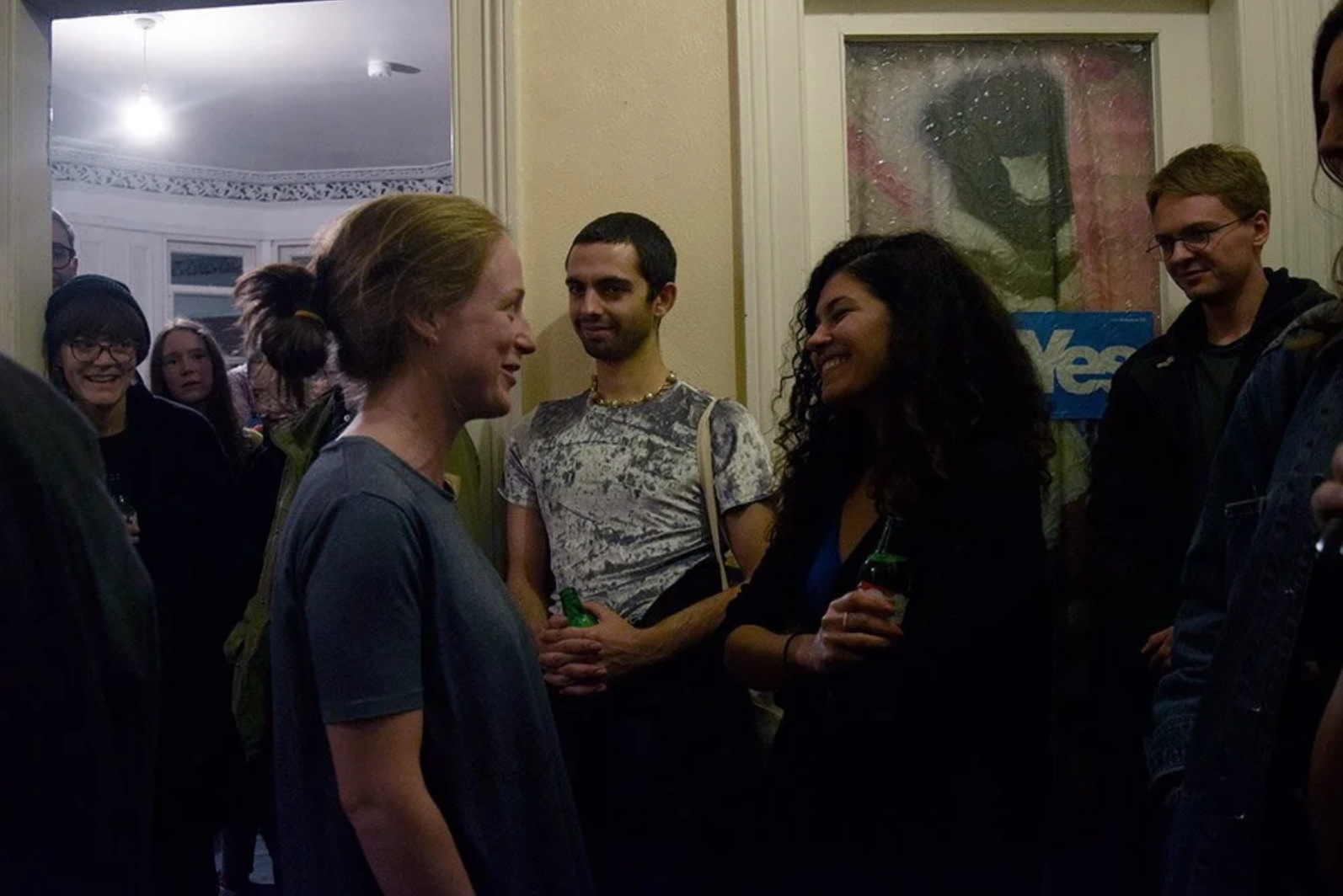
Arm’s Length Government Body, Shona Macnaughton, Celine, 2016.
When I interviewed you two years ago for my Master’s dissertation on DIY art spaces in Glasgow, one of the reasons I had chosen Celine as a case study, as well as David Dale Gallery, was due to its longevity as well. I was really shocked at the amount of time these two spaces were able to sustain themselves as artist-run/led projects. Around the time I would’ve been doing these interviews, everyone was working on their applications for multi-year funding from Creative Scotland. A large part of the conversation with Max Slaven was what would happen to the gallery if they did not receive that funding. It’s interesting to think back on those conversations now.
These are conversations I’ve had with Max before. Him and I went to school together in the same year, so we’ve known each other and been friends for a long time. Part of those conversations have some influence over how I’ve thought of Celine and that relationship to funding. They’re [David Dale Gallery] in a position where their livelihood is contingent on running that space. To be able to justify it being your job, it has to operate at a certain scale, and that scale in itself creates that precarity. At the end of the day Creative Scotland is an arm of the government and whatever the culture secretary’s agenda is on behalf of the government shapes what Creative Scotland prioritises. I’m not saying it completely top-down, but the structure itself isn’t very sustainable.
That’s always been something I’ve thought about regarding the funding structure in Scotland and how different it is from where I’m from in America. You have museums like The Smithsonians in Washington, DC or The Walter’s Art Museum and Baltimore Museum of Art in Baltimore, MD that receive government funding, but there’s also a very large donor culture that these institutions rely on that doesn’t exist here in Scotland.
Even a collecting culture where people buy art. I don’t know how much work has gone into developing that, but that is the thing that makes an artist’s life more sustainable; being able to sell something here and there. Even if it’s just to keep the dream alive. If an artist here could have a cost neutral practice, that is a massive achievement and that’s not even thinking about making a living, that’s just about not losing money. The older you get, the harder it is to put up with that. The city is not as cheap as it used to be when this ‘Glasgow Miracle’ was invented. When you could be on the dole and do Transmission and rent a flat and a studio. That was a historical sweet spot economically.
What are the three most important lessons you’ve learned regarding curation and running a space that you’ll take with you into your next project?
Oh, fuck? Three lessons? What have I learned? Don’t underestimate the desperation of artists. Basically what I mean by that is if you’ve got a space and no money, but you’re willing to give the time, most people will do the show. You can approach strangers through that. The relationships, because you’re doing it through a position of care about what they do, turn into friendships which is really good. An important thing about being independent is that you make yourself immune to critique. People can say what they like, but if you’re not taking anyone’s money, you’re not beholden to anyone’s opinions. There’s always a price. The thing I talked about with Max, being able to do it as your job creates a scale where it creates its own precarity. If you’re in a position where you can keep doing it without taking anybody else’s money, nobody else gets to tell you what to do. It means if people don’t like it, you don’t need to concern yourself with that. Particularly nowadays, people frame their critique as a moral or ethical position, so you’re not beholden to that. There’s always a price and benefit for different things. The longer you can hold onto your independence when you’re putting on shows, the better. It helps you be agile and a bit more heterodox with your curatorial choices.
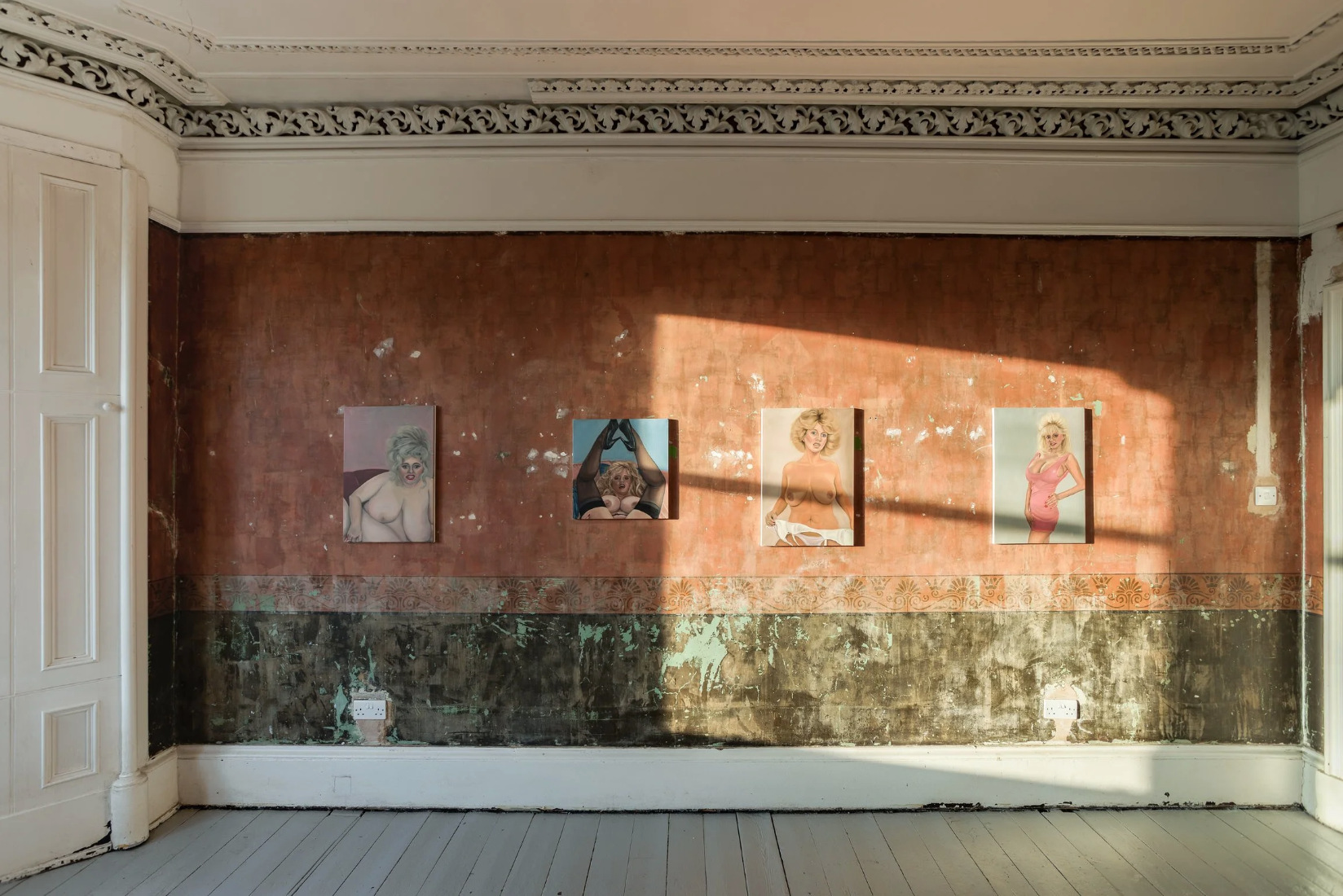
Another Dirty Room, Erica Eyres, Celine, 2022. Photo: Patrick Jameson.
What does Celine’s future look like now?
The idea, the big fucking idea. Now I’m working full time, I would like to spend time doing my own work, which I’ve not managed much in the past couple of years. One of our biggest achievements was we managed to get Tate to acquire Carole Gibbons. That was massive. That’s something that became more important to me for a multitude of reasons. Believing that the artwork should be recognised in that way. But also my personal politics as a Scottish nationalist, thinking we don’t do a good enough job of celebrating our own interesting cultural figures. If we’re going to be in this union politically, the institutions that are supposed to tell the story about British art should include more Scottish art to tell a fuller and richer story. Accompanying that, also doing the first solo show that Elizabeth Radcliffe ever did, the tapestry weaver from Edinburgh. There was a real quality to the work. Off the back of that show, she’s done more shows abroad in New York and was included in the survey show Women in Revolt at the Tate. It’s the kind of thing you realise you do because you become that validating mechanism. You can have a role in contributing to changing that story. Giving people in the future a broader picture of what the landscape in Scottish or British art was like at any given time.
In relation to that, I’m moving back to my hometown in Ayrshire called Kilbirnie. Which is only a half an hour outside of Glasgow. I’ve talked about this a lot over the years. In a way, my journey towards becoming an artist is one where you don’t have access to art. And if you’re not in an affluent family that recreationally goes to galleries, you don’t really know what’s out there. Your root is through popular culture and you gradually discover more sophisticated work. My idea is that when I move, I’ll get a space there and continue doing the program with that same throughline that developed here, just in a small town.
There’s real value in it. It only recently came to me, knowing this was coming to an end, but a couple of years ago the George Wylie Wyllieum opened up in Greenock. I was there recently because they had a new solo show open with Claire Barclay which was really good. Claire is one of these good Scottish artists who’s been here for a long time. It was nice to make the journey, quite purposefully, and go and see this exhibition. It’s not to say that everybody in Greenock will go see the show and they’ll be raving, but that’s an opportunity that I never had growing up because I never lived in a city. I’ll make sure it’s close enough to a train station so that it’s accessible to people in Glasgow as well, but it’ll be a satellite thing. That internal agenda could change the program and you don’t really know how until you do it. Maybe taking things out further afield will cause there to be more of this kind of activity outside of these urban environments. It remains to be seen how sustainable the initiatives that are emerging in the past few years that are really positive like Boardroom Committee Room and R.A.T are. It’s becoming really expensive to live in Glasgow. I’m moving half an hour away, but maybe it even spills into Paisley and then from there a wee bit further. Hopefully people do get used to having to venture out a bit.
There’s a weird invisible boundary that I feel I’m aware of given my relationship to where I grew up and surrounding towns. There’s not really contemporary art, but more hobby painting or crafts. So maybe there’s a way we could exist alongside people that attend to different interests. I think a lot of people assume contemporary art shows don’t belong or won’t be received well in places like this, but you don’t know. The audience that Celine acquired didn’t happen overnight. It took a few years. For ages, we were appointment only because we would be sat here on a Saturday afternoon and nobody would come. Maybe through time, because there’s not a bunch to do in some of these towns, someone will get curious.
It’ll force different conversations for me with people who come to the shows because at the end of the day we’re in the heart of this cool neighbourhood and lots of people in this scene live very close to this flat now. The majority of the people who come to see the shows are artists themselves or work in the arts in some capacity. That allows me to indulge assumptions that I don’t know I’m making. Maybe now, my visits will be more sporadic but if it’s from people who don’t have the same background, I’ll have a harder time explaining myself. That’s good.
It makes me think of my friend Ainslie Roddick who was at the CCA at the time. She’s the Director of Atlas Arts now. She was talking about voices in her head when you’re making work. They’re real people’s voices; people that you know well. And you’re anticipating their response to things. They become some sort of guide when making decisions. I remember Ainslie telling me that when she was thinking of a program and being conscious of different types of people she’d have to consider and that I was one of the voices. I was really touched by that. Through doing the Celine project somewhere else, I’ll encounter a new type of voice that will shape what I do. But until I encounter that, I don’t know what shape that takes.
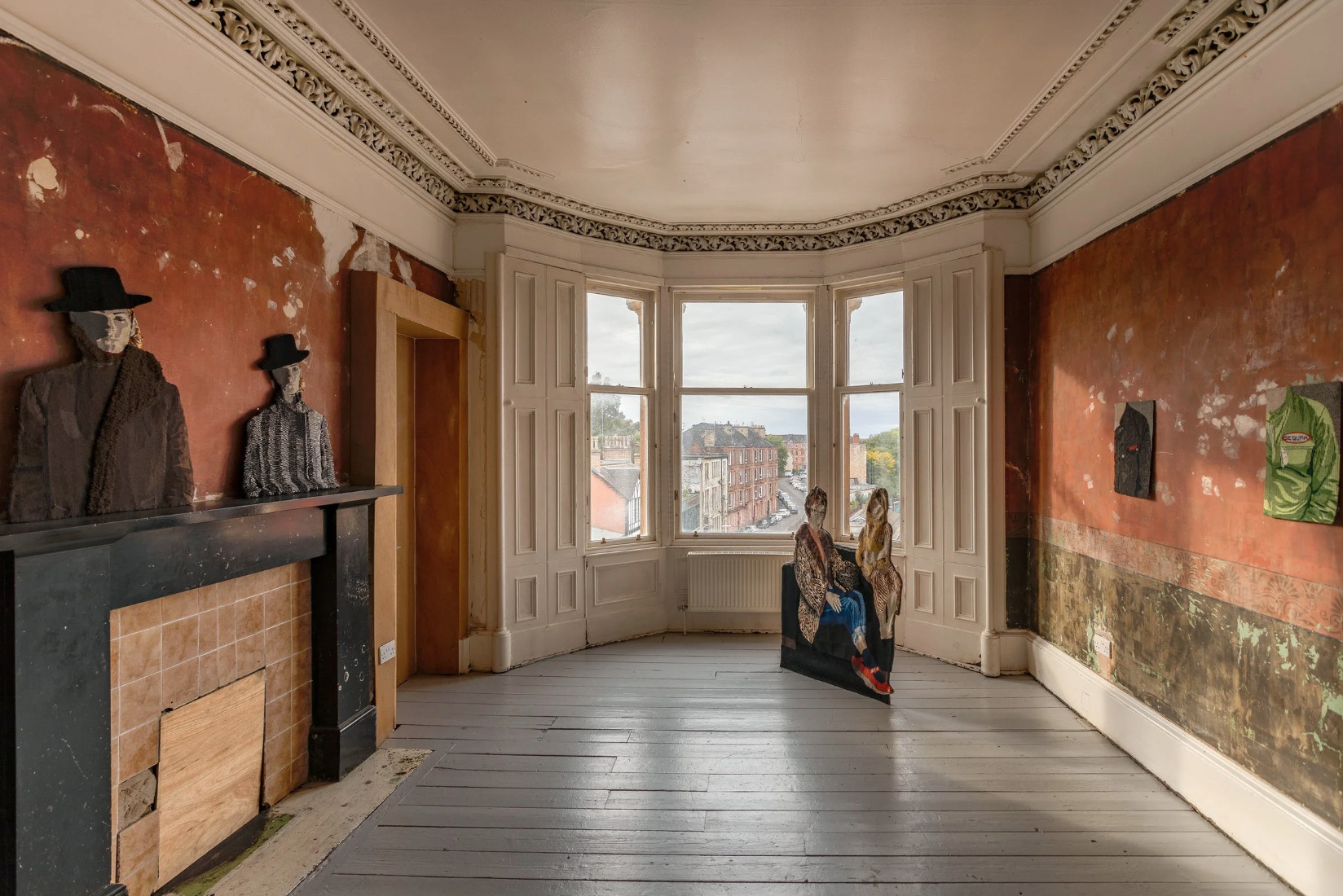
Elizabeth Radcliffe, Celine, 2022. Photo: Patrick Jameson.
—
In the Studio is a monthly series interviewing Scotland-based artists and curators in their studios, conducted by Chaz Scott, a curator and art historian based between Baltimore, Maryland and Glasgow, Scotland.