
Articles
Anal Capitalism
Paul Pieroni
A preamble from Glasgow Art Map:
The concept of ‘Anal Capitalism’ seems like a brilliant space to start with this new series for the Journal. This primer of sorts, these three forthcoming texts, to be published over the next three months, is a go at figuring out what a space for writing about contemporary art, critically and thoughtfully, might look like, what it might engage with, and who and why, in Glasgow, now.
We’ve invited three Glasgow-based writers to respond to a review or article or anything published in Variant, MAP Magazine and Nothing Personal—three journals/magazines based in Glasgow/Scotland operating in various forms (and in various operational states) over the last 40 years. All three of the writers that we have selected have some connection to the journal/magazine we’ve paired them with, having previously been published by them or worked alongside them in some capacity.
This reflective conceit, we believe, is characteristic of the dichotomy that many of us feel: attempting to exercise criticality while a participant within the scenario we are critiquing. A balancing of our involvement within the arts sector as a (not so) viable career, with all the griminess that our participation makes us complicit in. And that this in itself is interesting groundwork to lay before we embark on commissioning more writing that will in turn face these challenges. Each writer, we feel, within their work, seeks to grapple with the politics and problems of practicing and working today, for writers, artists and galleries alike—these guys are really putting in the work!
For us, Glasgow Art Map, the purpose of this series is simply to look back at what has come before us and learn from these three brilliant spaces for writing and three brilliant writers’ reflections. An editorial post-script from us, gathering our thoughts on the three texts and some probably pretty free-form ideas about what this Journal with writing on it could look like, will follow, and then we’ll start actually doing it, i.e., commissioning some exhibition reviews, etc.—enjoy!
__
Anal Capitalism
What flies … and what sinks
What smells … and what stinks.[1]
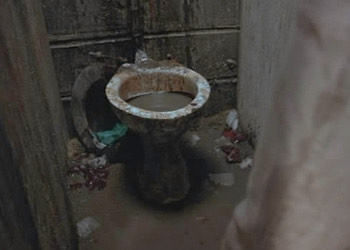
One way to think about Variant, the intermittent magazine of social and cultural critique based in Glasgow, is as the site of attempts by writers and researchers to show how the lives of artworkers in Glasgow plumb together with urbanised capital. Just as a riser diagram of plumbing infrastructure renders otherwise invisible systems legible, revealing how pipes, flows, thresholds and interfaces link together to create coherent networks spanning different perceptual registers, multiple articles in Variant’s archive (which is free to access, either online or at Southside art space, Broadside) expose links between subterranean systems of money and power coursing through Glasgow, and the city’s lauded contemporary art scene. Without Variant we would be in a more impoverished position regarding our understanding of how artworkers came to be enmeshed in the political-economy of a city whose governing causalities continue to vortex down the pan of history.
I will return to Variant a little later, but all this talk of plumbing and political-economy puts me in mind of some of the ideas in Amphibious Realities, Gail Day and Steve Edwards’s new book on American photographer, filmmaker, and theorist Allan Sekula’s ‘documentary poetics’. Noting a drawing of a shitting dummy that features in a scene in Harun Farocki’s film Leben – BRD (1990); a scribbled remark recording Peter Wollen’s discussion of the Channel Tunnel ingesting UK passengers then excreting them out in France; and a sketch of a steaming turd, accompanied by the word play that serves as this text’s scatalogical epigraph, Day and Edwards observe that “excreta and waste flows” appear regularly in notebooks Sekula used to document his artistic process. The authors find similar images in Sekula’s artworks: a photograph of a cut-through house in Fish Story (1995)—this exposes the home’s bathroom to public view, or bobbing fecal matter contaminating a swimming pool in a Barcelona hotel in the video, The Lottery of the Sea (2006). Turning to Sekula’s 1999 essay on the work of the American conceptual artist Michael Asher, Day and Edwards affirm a link between Sekula’s preoccupation with shit and plumbing and his critical stance on political economy. For Sekula, the pipes so often exposed or foregrounded in Asher’s institutionally critical work “transmute from mere utilitarian conveyors of bodily waste into flows of money”—a remark that prompts Day and Edwards to identify a heuristic in Sekula’s work: anal capitalism.
While Day and Edwards go on to examine ‘anal capitalist’ inflections in Sekula’s work through a series of psychoanalytically charged ruminations on the shit as gold metaphor, it is a fleeting reference they make to anal capitalism as an urban phenomenon that I want to pick up on here. In Sekula’s foreword to Mimi Melnick and Robert A. Melnick’s Manhole Covers (1994), a photographic book documenting 250 manhole covers across a range of American cities, Day and Edwards identify an image of late-capitalist Los Angeles that contradicts “the myth of the depthless city” perpetuated by Fredric Jameson, amongst others. Against Los Angeles as “a world of surfaces”, Sekula’s foreword identifies the city with a series of “depth images”—tectonic, unconscious, noir, and subaltern in nature. Linking this chthonic conception of the city to Sekula’s Asher-inspired account of political economy as plumbing situates capitalism’s essential operations beneath the world of everyday urban appearances.
But what does it mean to say that capital, like oh so much shit trafficking plumbing, now operates beneath everyday urban appearances? To explain, with the collapse of long-standing Fordist industrial economies in the West in the final decades of the twentieth century, de-industrialisation unleashed widespread social instability. The disorientation and confusion resulting from deindustrialisation was, in turn, compounded by the emergence of new post-Fordist modalities of accumulation predicated, in Marx’s term, on ‘fictitious capital’. While speculative forms of finance are most commonly associated with bond, stock, FX, and other global market systems, finance has also been substantially urbanised over the last half century. As a result, cryptic forms of financial speculation now saturate the cities we occupy.
Consider the situation in Glasgow. Over the past five decades, the city’s economy has become increasingly reliant on financialised activities linked to rentierism, assetisation, and land speculation. While the crisis-prone effects of these real-estate and land forward forms of accumulation are writ large in the city—think decimated high streets; vacant land ‘banked’ behind hoardings; and the metastatic growth of new office, luxury or student developments—their causalities resist easy explanation. Indeed, a proper reckoning with what is happening to urbanised capital in Glasgow would need to attend to economic activity that flows (and sometimes bungs up) beneath the city’s crisis and accumulation marked landscape. This would require synthesising a tangled configuration of contributing factors through which land and property are organised, governed, and financialised. These include the council, various governments, their development agencies, and other public funding bodies; planning regimes, valuation practices, consultancies, and other infrastructural intermediaries; legal frameworks; private investment firms, offshore tax havens, sovereign wealth funds, and other ‘black box’ sources of private finance—a task well beyond the scope of this short text. In summary, Glasgow’s urbanised economy operates through opacity and fragmentation. In this way it systematically frustrates democratic accountability.
This brings us back to Variant. Across Variant’s original iteration (Volume 1: 1984–94), its reprisal under the stewardship of Leigh French, with Billy Clark, then Daniel Jewesbury, then a wider editorial committee (Volume 2: 1996–2012), and its most recent manifestation: a one-off special issue edited by John Beagles, Benjamin Fallon and Neil Gray published in 2025 to mark Leigh French’s sudden passing in 2023, a number of articles document this disturbing slide away from accountability. Variant has also been quick to recognise the different ways in which artworkers have been implicated in grottoed processes characterising urbanised capital in Glasgow. A good example is Neil Gray’s ‘Glasgow’s Merchant City: An Artist Led Property Strategy’ (Variant 34 (2009)). Detailing a moment in the late 2000s and early 2010s when Glasgow City Council, alongside allied regeneration agencies, enrolled artists into urban renewal schemes designed to revalorise real estate, inflate land rents, and attract speculative private investment to the city, Gray’s article focuses on the provision of free or subsidised leases on vacant shop units in the Merchant City as part of an ‘Artist Led Real Estate Strategy’ aimed at producing a ‘creative cluster’ capable of signalling future value to investors while sanitising surrounding areas such as Trongate in advance of gentrification.
Like other articles in Variant’s archive, ‘Glasgow’s Merchant City’ should be of interest to anyone who wants to understand how artworkers have been transformed into instruments within highly speculative—indeed, anal capitalist—political-economic operations taking place in the city. If you, like me, believe that art should not be valued solely on its utility as a tool for land and property revalorisation processes engineered by shadowy urban and corporate elites, then engaging with the sixty issues of the magazine that have been published to date should be considered essential work.
Paul Pieroni is an art historian and curator based in Glasgow.
Variant is “a magazine with the independence to be critical that addresses cultural issues in a social and political context”, based in Glasgow. It has run in three iterations: volume 1 (1984 – 1994), volume 2 (1996 – 2012), and a Special Issue published in 2025 in memory of former editor, Leigh French.
[1] Gail Day and Steve Edwards (2025) Amphibious Realities: The Documentary Poetics. London and New York: Verso. p237.