
Reviews
GAM x GI Review: Light Sown in Memoriam, Natasha Thembiso Ruwona, Adam McNeil and Bex Šik, Listen Gallery
Review by Eilidh Akilade
GAM x GI Review:
Light Sown in Memoriam, Natasha Thembiso Ruwona, Adam McNeil and Bex Šik
Programmed by Listen Gallery at Glasgow Necropolis, 5 – 21 June, Glasgow International 2026
Thinking a lot on that tweet about headphones and neoliberalism that said, wearing headphones blocks out the world and is super individualistic, but small earphones are sort of okay. It did the rounds on Glaswegian Twitter, when Glaswegian Twitter still existed. ‘Haha’, we all said and it was nice to be together in it. Thought it was reductive then and it feels more reductive now, after spending time with Listen Gallery’s Light Sown in Memoriam at Glasgow International.
Light Sown in Memoriam is an experimental audio tour, set within Glasgow Necropolis. Site-responsive sound works from Natasha Thembiso Ruwona, Adam McNeil and Bex Šik form a triptych which returns us to our bodies and to the land upon which they traverse, that of the Necropolis. The artists’ works are conduits: we listen to the Necropolis through their sonic interventions, calling to a past (mis)remembered. With our headphones/earphones, Light Sown in Memoriam brings us closer to ourselves and another.
The tour is 51 minutes, 13 seconds. It is longer than I’d usually spend at an art exhibition, particularly during Glasgow International. Much to see. Tend to walk fast, too – 51 minutes, 13 seconds, can do it in half that time. Easy. Consider playing it on double speed as I’m a bit hungover and on five hours sleep but Mixcloud doesn’t have that option – at least not on the browser version, which I am. So instead, I decide I am glad – thankful, too – for this refusal to rush.
Still, I want to write the sounds of Light Sown in Memoriam without my body. Hung in a vacuum. Detached and cool. Critically engaged. It reads dull, but. Flat sentences and flatter sounds. Is it individualistic to write with one’s own body? Not with Listen Gallery, I don’t think – sorry!
How to say that I feel Ruwona’s work upon my shins and McNeil’s at the edges of my collarbone – authority pins us like that, at each end – and Šik’s across my cheeks? Earphone, headphone: we listen with our bodies and the words call attention to them.
Slow steps; heart rate up, somehow. It is likely on purpose: slowing down, we feel our bodies and their anxieties more. The land beneath, too. Soon, I am doing that art gallery walk. Hands in pockets and sink into one hip, wait, then roll too slowly into the other. Most likely, it is bad for my hips. No matter.
Return to the start: Ruwona. In my pocket, I clench my left thumb, with my left fingers. Hope to hold onto the rushing water as it carries me – us – upwards, to the highest point of the Necropolis. Molendinar Burn runs underneath the site and in Ruwona’s recording it is a reminder of the city’s waterways and the imperial wealth they carried and carry. Tinny beats. At the top of the Necropolis, Ruwona invites us to take ‘one big deep inhalation’ and I cannot, not quite. The second city of the empire rings out, still.
McNeil’s audio glitches and so does my chest. We consider John Knox but never quite come to face him. Can’t bear to turn my face towards his and the map does not make us do so. It is an interrogation with inherited patriarchal power and it glitches. Warps, too. ‘As much as he hated women, he relied on them for everything,’ says McNeil and it takes some time until I catch it in full. There is a drone and it buries itself into my stomach, because legacies like this hollow us out.
Then, Šik’s cycles. The work is concerned with the moon, geometry, ley lines and I am a little tired, now. There is Šik’s child’s voice and flagpole recordings and a list of Lock Hospital patients’ occupations and numbers sound out footstep-like because the dead were walking like me – us – once. Its laughter lands in my throat. A thrumming, too. I start to sway, it is the feminine pull.
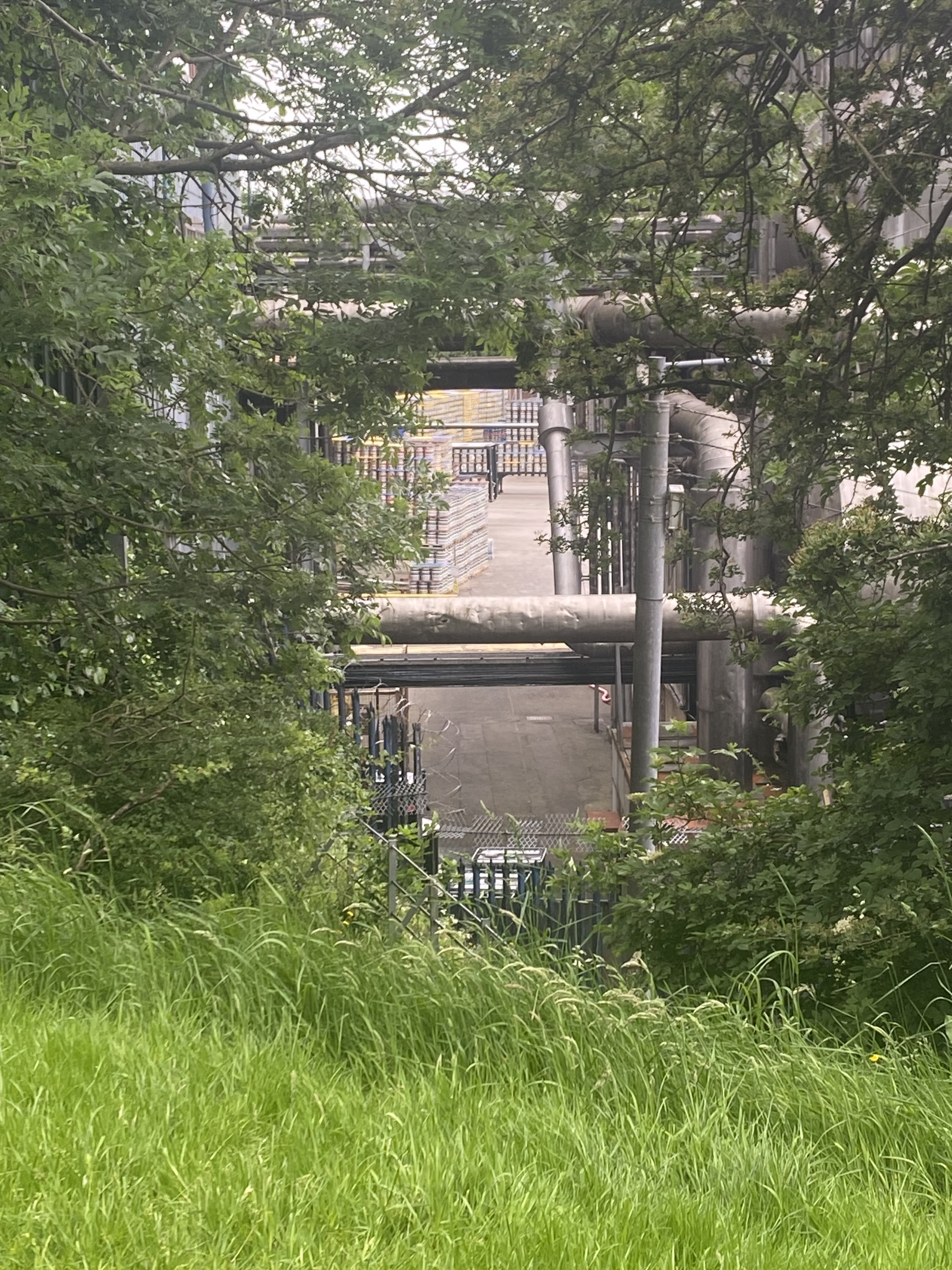
With Light Sown in Memoriam, we hear the Necropolis twice – inside the triptych and outside the triptych. The latter is a welcome invasion, in that it is not an invasion at all. The Tennent’s Wellpark Brewery groans and a phone notification sounds and a helicopter roars, so I am thinking of others, now. We drank Tennent’s together at Dyke Just Do It on Friday night and my phone is on Do Not Disturb but someone else’s isn’t and when there is a helicopter, it usually means that something bad has happened, I am hoping all is well. Acknowledging the vulnerability of a boundary – here, marked by earphones and headphones – breaks down such boundaries, at least a little.
I see people, and this includes the Friends of Glasgow Necropolis. They run tours. The tours are ‘friendly and informal’, their website says. The tour leaders wear purple vests; silver reflective strips stretch longways and sideways. Small groups follow them attentively. One tour leader hangs up the phone and calls out to their group that they don’t only talk to dead people, see, haha, or maybe they say, there they go, talking to dead people again. Can’t quite hear as I am listening to Light Sown in Memoriam with my earphones, one in each ear, but I hear enough to recall the moment later, now, and hesitate over its lost sounds. Glad to join others upon this land.
Riah Naief, founder and curator of Listen Gallery, tells me that’s her main critique of the space – that it was (or, it is, we hope) gallery-based. Riah wants public art in public space; Light Sown in Memoriam allows this. Demands it, gently.
If neoliberalism is all about individualism, separatism, then Light Sown in Memoriam is not that – despite the headphones/earphones. Here’s Ruwona and McNeil and Šik together. Here’s Listen Gallery and Glasgow International and the Friends of Glasgow Necropolis together. Here’s colonial legacies sitting next to inherited patriarchy, and then come the cycles, one after another, because these matters don’t simply rub against each other but also produce each other, rely on each other, shapeshift into one another.
Hoping that the tweet is remembered – intangible, but sticky. I listen to Light Sown in Memoriam with wired Apple headphones. Lightning connector, I think. And the white wire is not unlike the ley lines or the winding paths of the Necropolis, drawn in blue orange red on Listen Gallery’s map. Knots, folds back on itself. Holds us and lets us hold on.
Eilidh Akilade is a writer and arts worker, from and based in Glasgow.
This review was commissioned by Glasgow Art Map and Glasgow International as part of a series that offers critical reflection on this year’s festival.