
Featured Exhibitions
Holding Patterns
Sgàire Wood
Govan Project Space

Installation view, Holding Patterns, Sgàire Wood, Govan Project Space, 2026

Installation view, Holding Patterns, Sgàire Wood, Govan Project Space, 2026

Installation view, Holding Patterns, Sgàire Wood, Govan Project Space, 2026
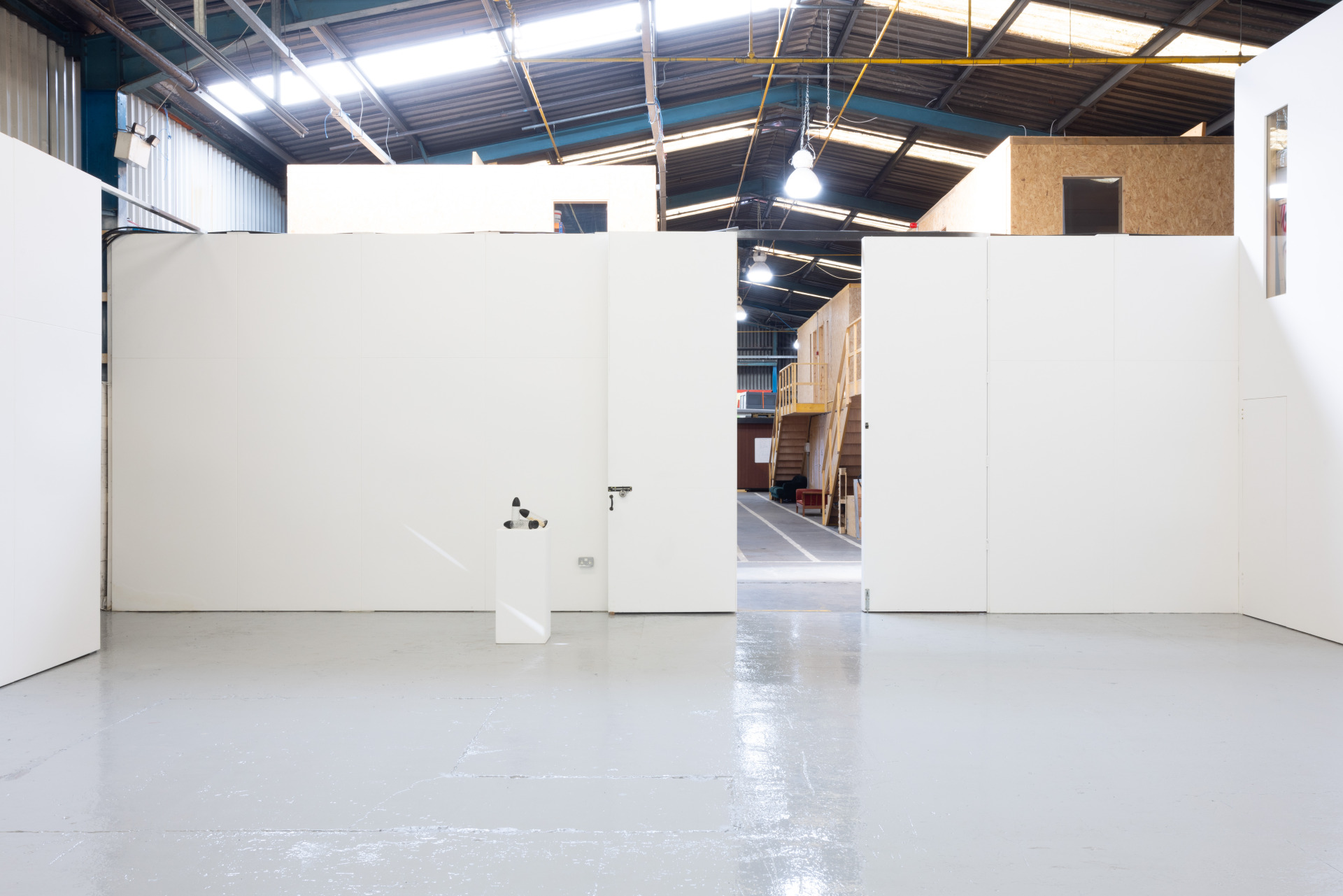
Installation view, Holding Patterns, Sgàire Wood, Govan Project Space, 2026

Installation view, Holding Patterns, Sgàire Wood, Govan Project Space, 2026
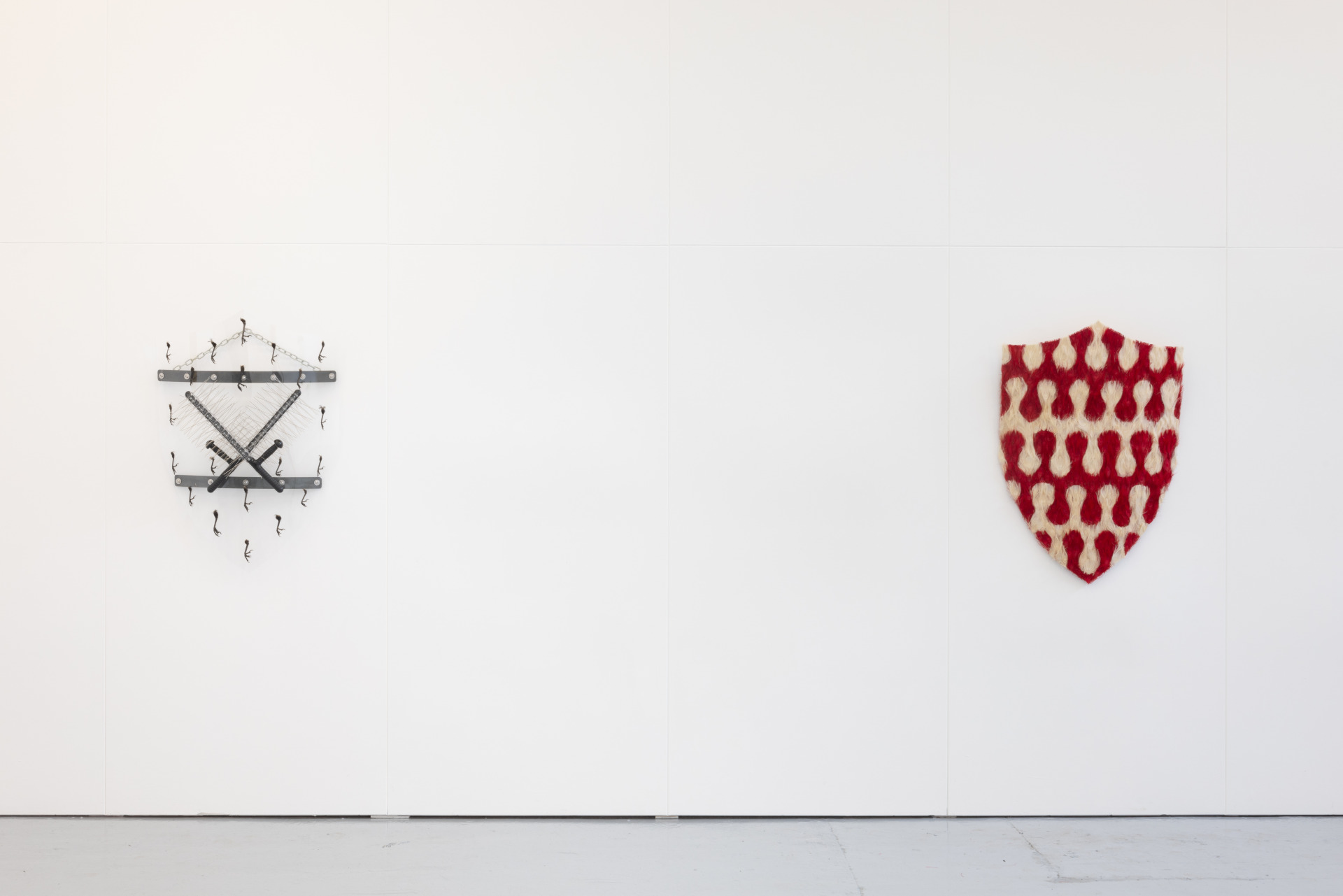
Installation view, Holding Patterns, Sgàire Wood, Govan Project Space, 2026

Installation view, Holding Patterns, Sgàire Wood, Govan Project Space, 2026
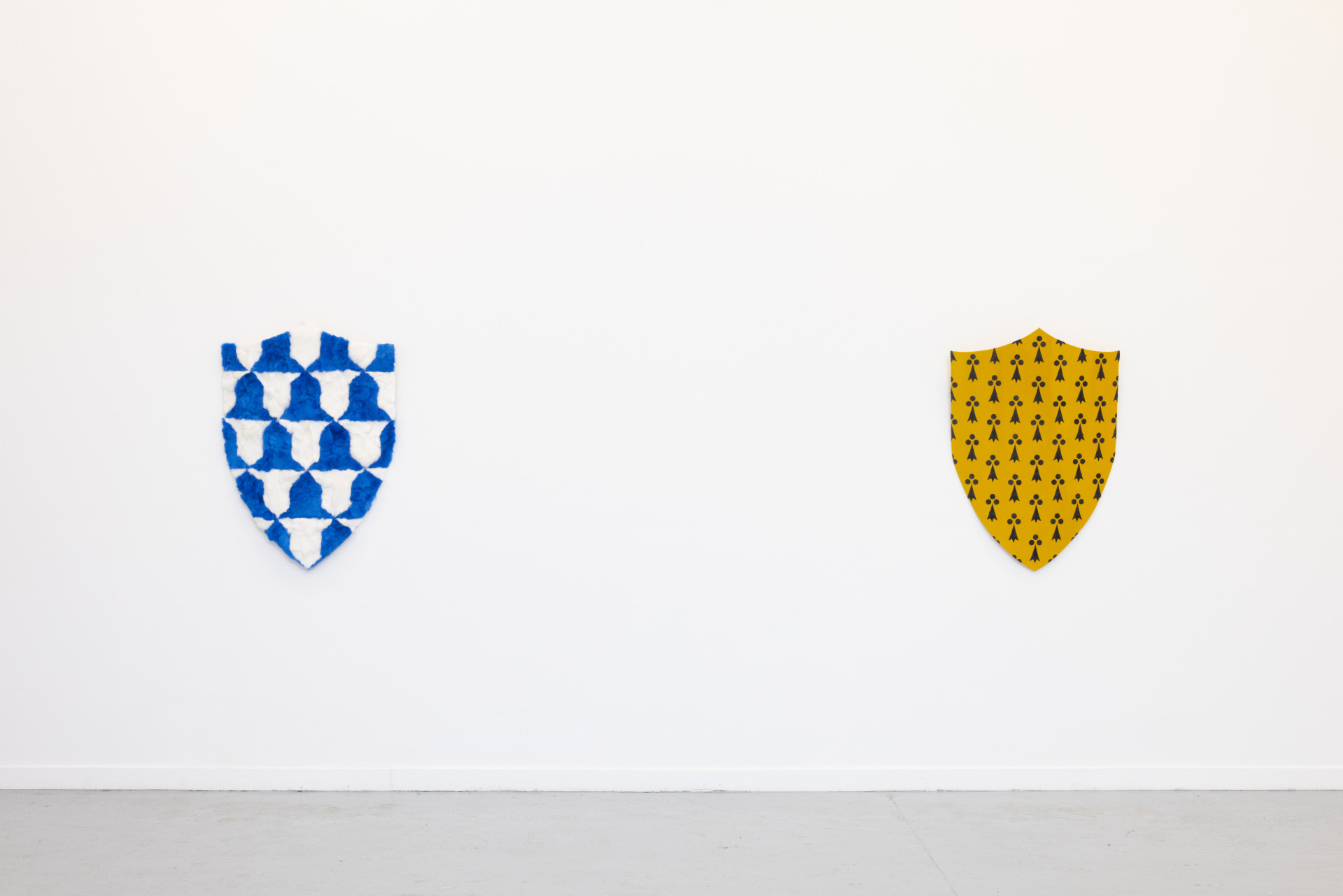
Installation view, Holding Patterns, Sgàire Wood, Govan Project Space, 2026
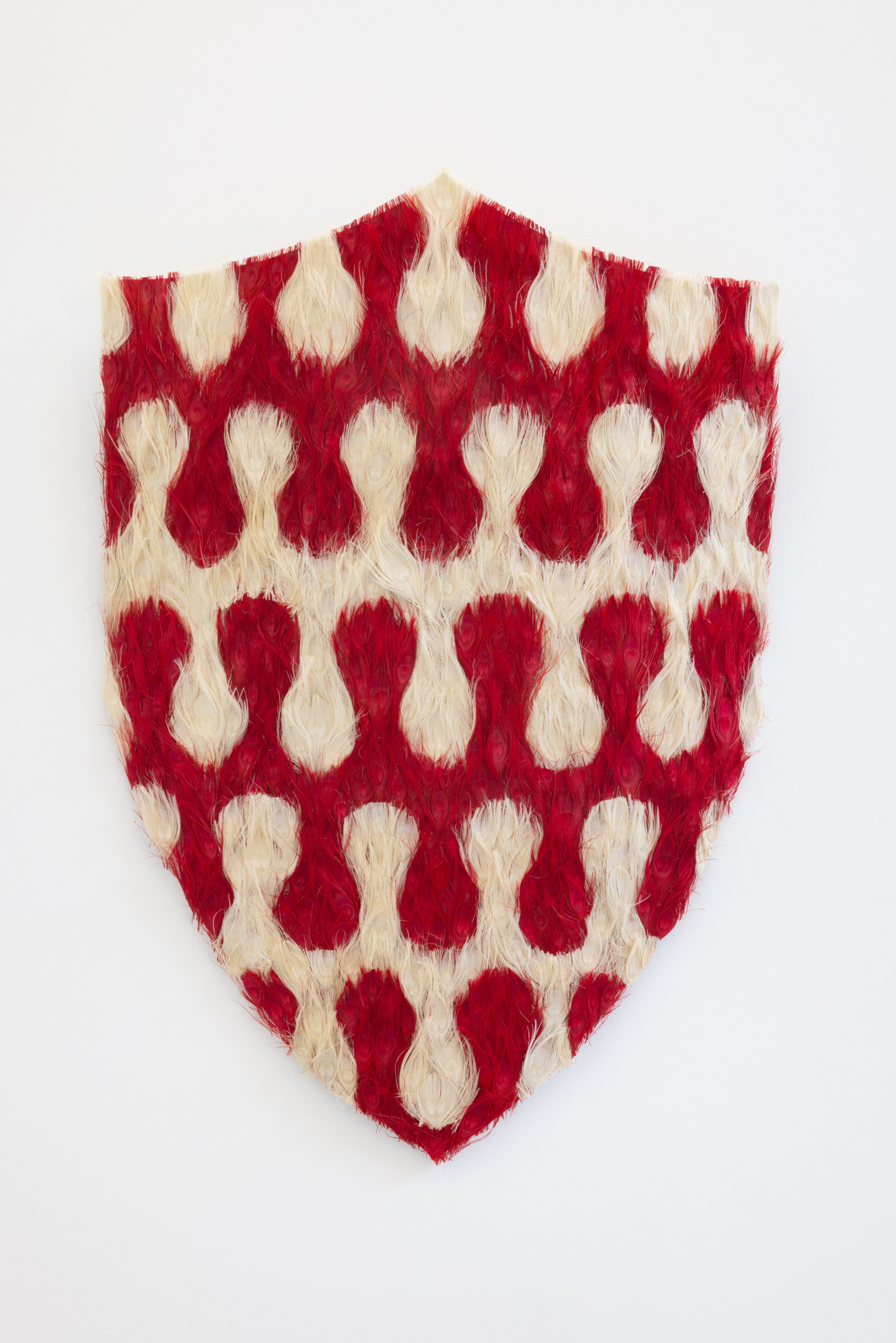
Barry nebuly of six, argent and gules, peacock feathers and plywood, 2026
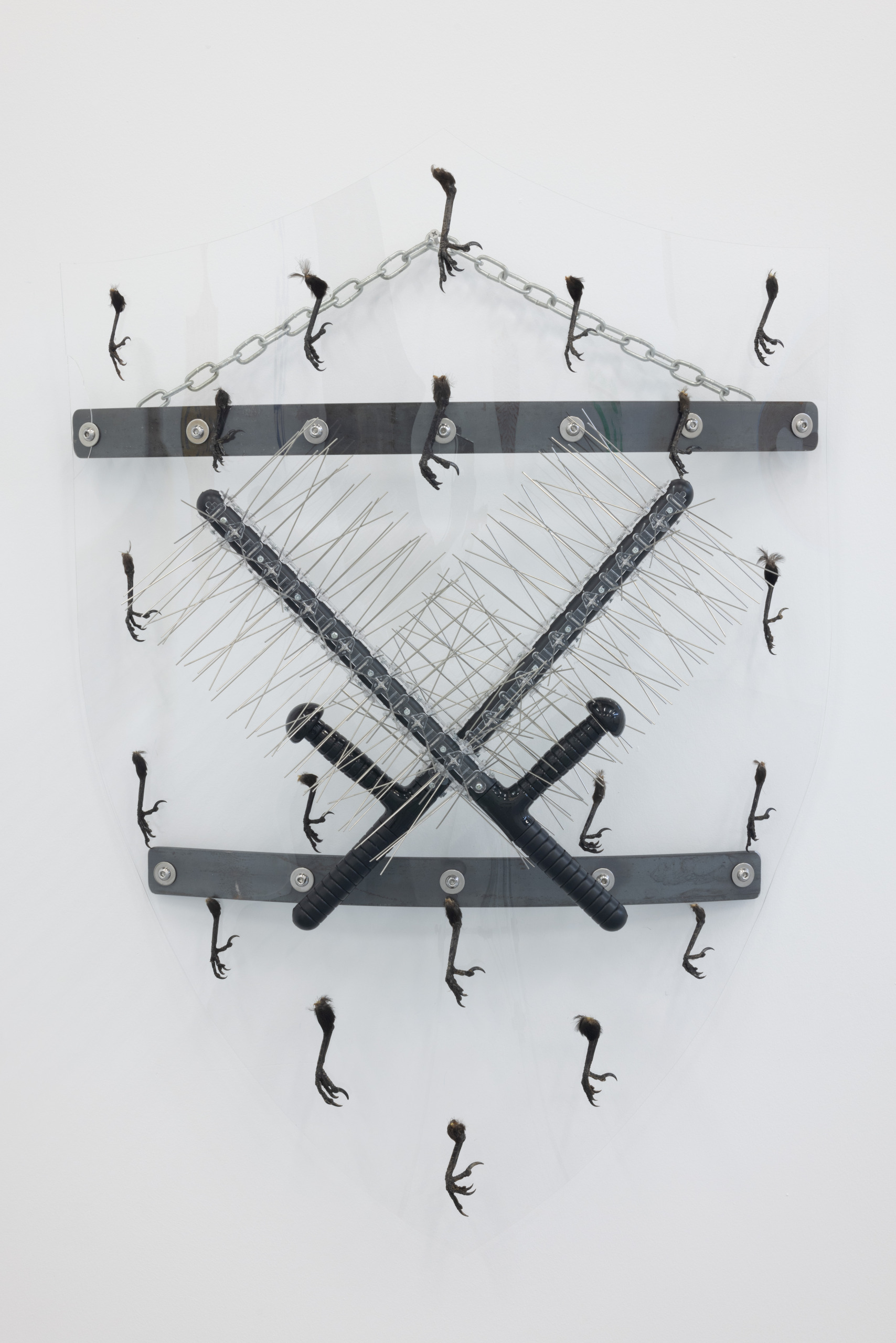
Argent, semy de jambes erased sable, two spiked clubs in saltire sable, perspex, steel, polyester, crow feet, 2026

Erminois, reflective tape, crow feathers, plywood, 2026

Vairy argent and azure, rabbit fur and plywood, 2026
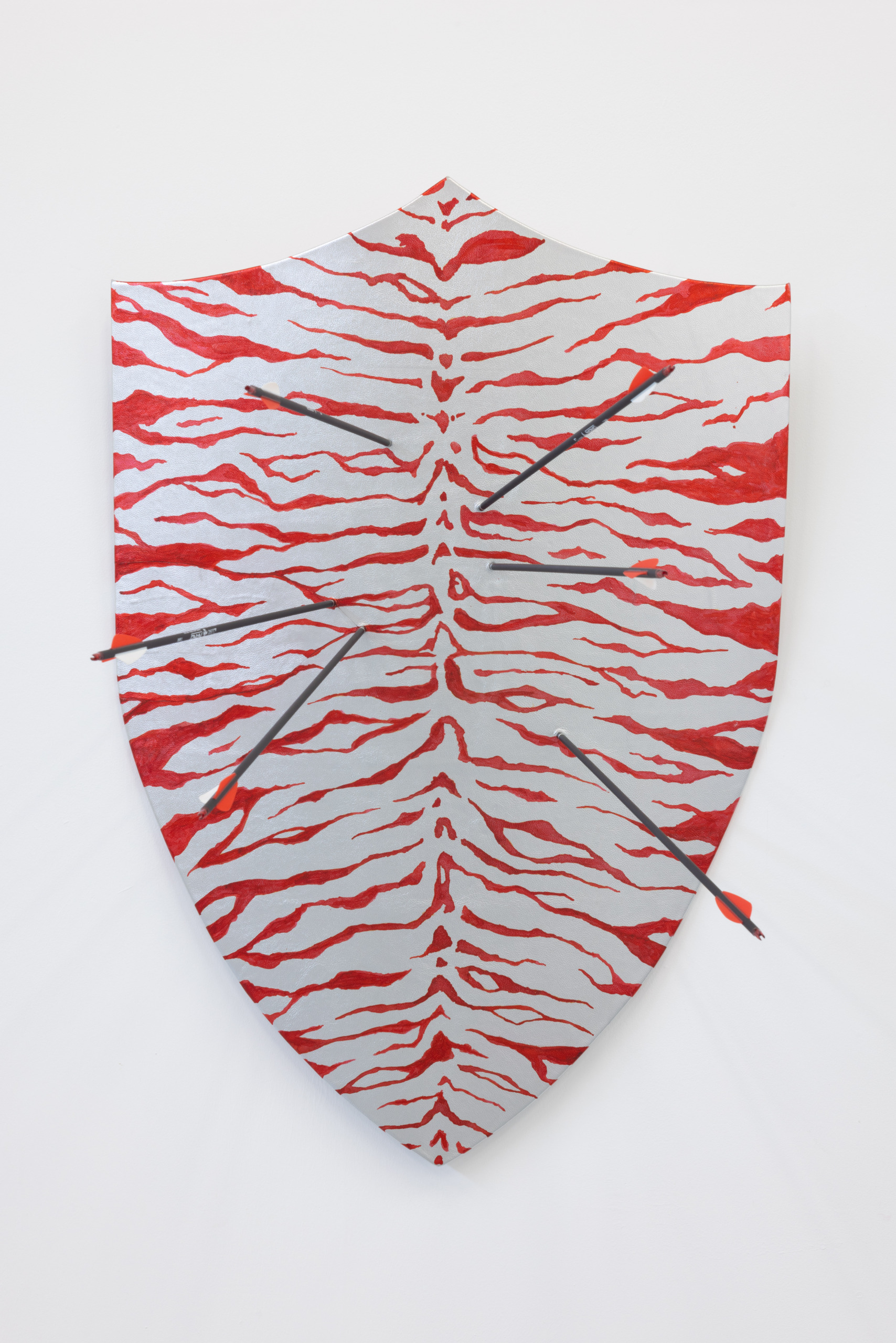
Barry argent and gules, foiled leather, ink plywood and arrows, 2026

Argent, semy de swans naiant vert, perspex, steel and acetate, 2026
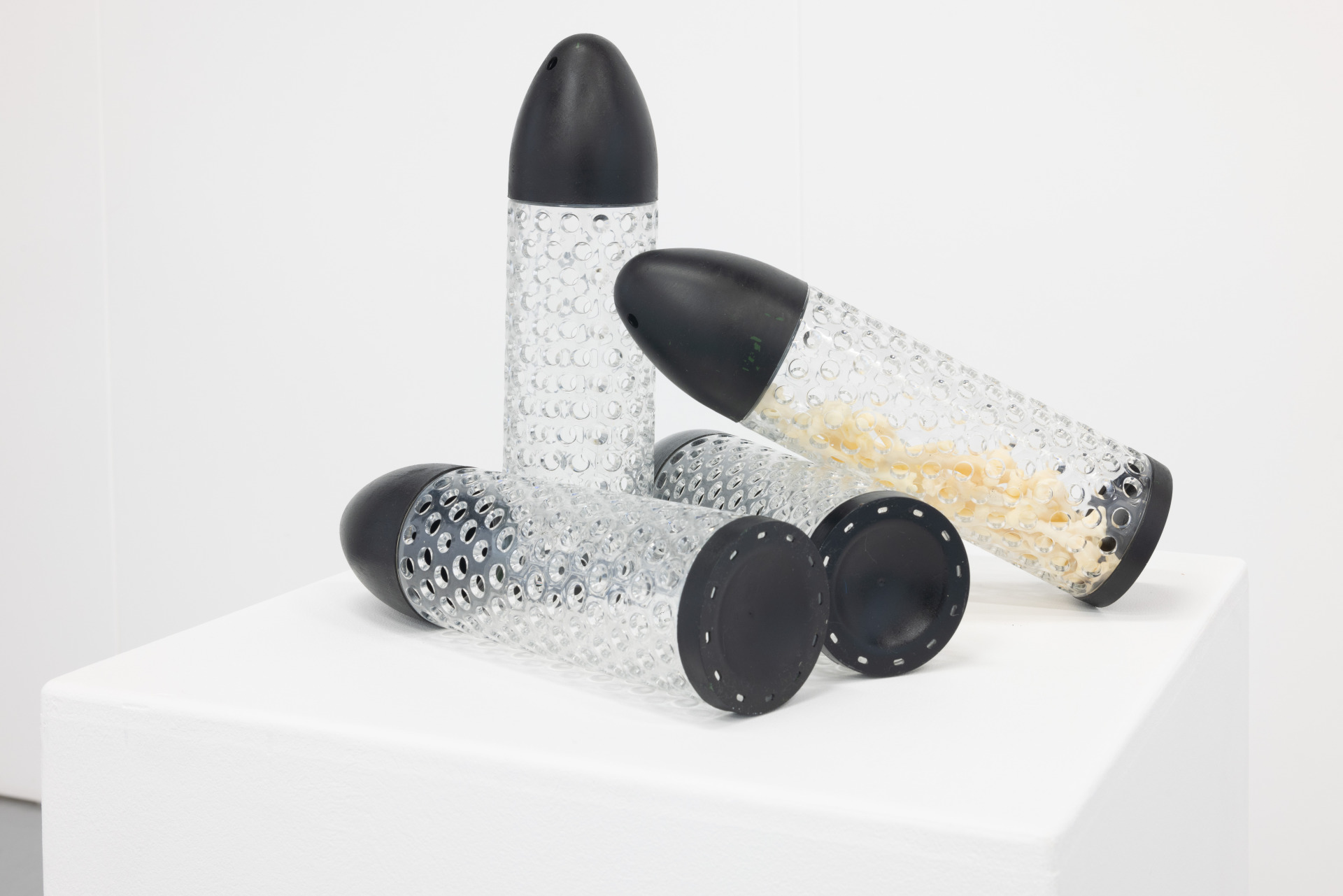
Four pellets sable, plastic, mink bones, 2026

Four pellets sable, plastic, mink bones, 2026
Holding Patterns
Sgàire Wood
Govan Project Space
28.03 – 05.04.2026
There are nine commonly used ‘tinctures’ in European heraldry, divided into colours, metals and furs.
While the colours and metals straightforwardly describe areas of flat colour, the furs depict patterns made from simple marks and tessellating angular shapes. The most common of these are ‘ermine’ and ‘vair’, visually derived from the fur patterns of stoats and red squirrels respectively.
Through centuries of abstraction and graphic simplification, the deaths represented by each infinitely repeating motif are anonymised and the design’s origin as a patchwork of flayed animals is further obfuscated under layers of projected significance.
Holding Patterns reflects upon the mundanity of violence and its ubiquity not just in heraldic convention, but our visual environment as a whole.
When we imbue the traumatically ‘real’ world around us with virtue and meaning, who is venerated and who is villainised? Which bodies become symbols of national integrity and who remains vermin? Why are we driven to express our ideas through the beasts of the field and graft our identities to the fruit of the land beneath our feet?
Sgàire Wood’s work prompts us to ask whether these processes celebrate nature’s complexity or appropriate her image with aims to oppress and exclude – either way it displays in equal parts our ability to revere the natural world but also our desire to dominate it.
Photo credit: Matthew Barnes