
In the Studio
In the Studio: Beth Shapeero
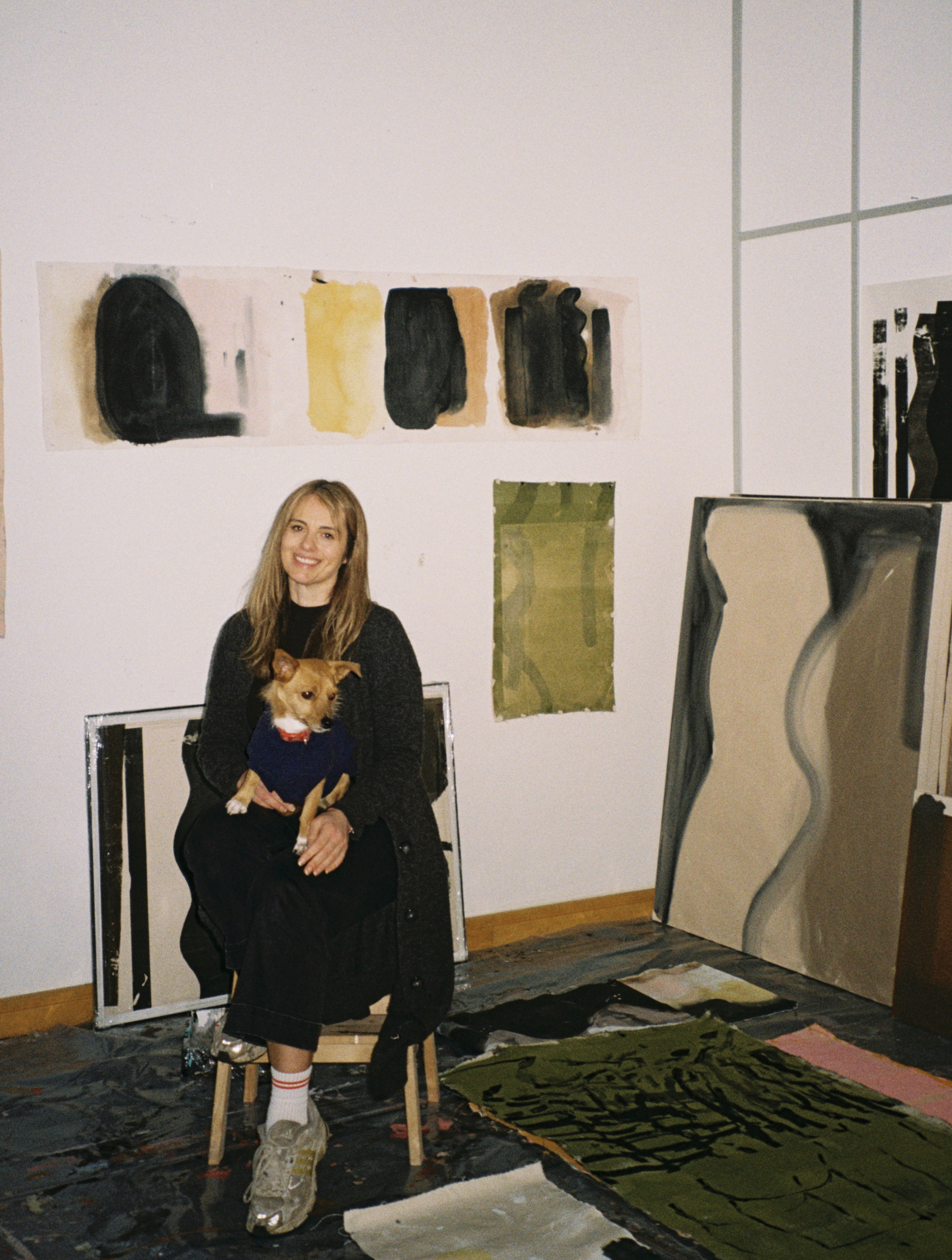
Beth Shapeero (b. Nottingham, England) is a printmaker and painter based in Glasgow, Scotland. She also makes work as part of the collaboration Two Step with artist Fraser Taylor. Additionally, Shapeero is one half of Shapeero Murray, a Glasgow-based art gallery. The most recent exhibition by Shapeero Murray, Let it Come Down with Gemma Dagger and Matthew Arthur Williams is currently on view at Stallan-Brand in Glasgow until the 22nd of May. Shapeero has an upcoming solo exhibition with The Vanner Gallery in Salisbury, opening on the 25th of June.
___
What’s the general background of your art practice and what brought you to Glasgow?
I did my BA in Nottingham, graduated in 2008, and then straight out of graduating that degree, which was a really great, like, experimental interdisciplinary art degree, I came out of that painting. Painting wasn’t very popular at that point and certainly not on the course. Me and a wee group started a gallery and studios, which is really cool because we didn’t have anywhere to go for studios. So we just rented a factory floor that had been used by some artists in the past and made some studios and started putting shows on. It was an amazing experience because we were so young and weird. We didn’t have a clue, but learned a lot through putting shows on. I think that was really formative in terms of understanding, from a curatorial perspective, how you might be considering an audience and how an audience experiences space. That started a bit more of a sculptural practice that I kind of got into because I was thinking about space more.
Afterwards, I wanted to progress and Nottingham, which is great in terms of having an experimental, active art scene, didn’t have much going on in a sense of opportunity or next steps. It felt like you were kind of making work to a group of people that were great, but how would you ever get a job or make money, or get anyone to pay attention to your work. It’s not like big curators were stopping in Nottingham. I think it’s changed a bit now because they’ve got Nottingham Contemporary, which opened just before I left, but sometimes it felt, back then, like you were in the shadow of London.
I did my MLitt in Fine Art Practice up here and Glasgow just felt like a more international city. It felt like Glasgow’s got its own stuff going on. It doesn’t look to London. Scotland doesn’t look to London or care about what’s going on in London. And it’s got its own scene and its own engine I guess. I moved up here to study and then met great people on my course and just stayed.
Is there an archive of the shows that you did with that collective?
Yes, it’s an NPO, which is a National Portfolio Organisation, which is similar to the organisations up here that get the regular funding [Multi-Year Funding]. It’s a massive deal because to get that regular funding, you have to reach a certain kind of level and it means that you’ve got this long term investment and full stamp of approval which is great. That’s still going, which is amazing. And it was founded by five of us. It’s called Backlit.
What does your current balance between your art practice and your work outside of that look like? How do you split your time? How do you find space to navigate both of those things?
It’s tricky. The ideal week looks like one day a week working from home, just sitting, doing computer work because there is so much of that. And all that admin, which is from accounting, any aspect of running a business, accounting comms, everything to do with upcoming shows, and all the website and Instagram, keeping an inventory and all your photos that you have to deal with as well. So it’s just a huge amount of work that I feel like I’m never scratching the surface of. And I’m only ever doing the most urgent things in that list rather than kind of getting it under control.
Then another day a week is Shapeero Murray focused. And then the rest of the weekend, studio is the plan. Shapeero Murray sometimes shifts to kinda like a day and a half because there might be a studio visit or a meeting or something. And everything is flexible. So there might be weeks where we’re doing a big install for Shapeero Murray that takes the whole week out, or I might be installing a show of my own work, or travelling because I need to go to a meeting or something. So it’s very easy for a whole day to be wiped out, but that’s the general sway of it. I’m really fortunate. I get to spend full time on my art practice apart from the Shapeero Murray stuff, which isn’t a part of my art practice, but it’s an extension of it, like a limb of it, I guess. It’s something that I’ve nurtured and it’s my baby as well.
How do you keep yourself accountable? What do you consider markers of success in your practice?
It’s pretty hard. I’m someone that uses a diary and I schedule myself goals. I actually really enjoy doing that. I get a bit of a kick out of getting all my calendars up and figuring out stuff and organising day to day. I like to plan out my day by the half hour and by what the most urgent things in my schedule are. I always feel like January’s a bit of a quiet month, and I have a bit of time to assess what’s going on and figure out what I wanna achieve and what’s most important, which is nice because the rest of the year, I don’t really have that. So last January, I set a goal of trying to make a big series of paintings, rather than doing scrappy bits of work here and there. I made sure that I cleared my most productive part of my day, so I’d come into the studio and work from ten ‘til two on paintings and not get distracted by email.
Right now, that’s shifted a little bit. I’ve actually got loads of work, and everything’s a bit overwhelming. So I’ve got tons of prints and paintings and bits of stuff that I haven’t documented. I have to go through this process of assessing the work and deeming it to be of value or not. Is this something I’m putting out there as my work, or is it just something that goes back into a recycling pile? So it’s, like, processing it, really looking at it, putting it on the wall. Then if I’ve decided that’s my work, I have to photograph it, sign it, title it, even do a little piece of writing about it. It’s something I’ve really been stuck on, but, actually, it’s something I’m getting asked for the more I’m working with galleries. Once the work’s photographed, it needs to be edited. I need to put it into an archive and then safely store them.
Going back to that point, at the beginning of last year, I kind of set this goal to be represented by a high-level commercial gallery. I feel like one of the hardest things about being an artist is that you’re just constantly having to fight for income. Someone selling my work for me rather than me having to try and make work and do all the aspects of running the business of being an artist and research and present the work and everything, as someone who is fighting against this constant struggle of having enough money to get by would be the ultimate goal because it would give you this freedom and make your work. So I’ve been thinking what are the steps to that? I break it down into steps. Having a really strong body of work, making sure it’s documented and presented really well, and in beautiful PDFs. And, you know, looking really sharp and making sure it’s communicated really well. I think something I’m a bit weak on is writing about the work and having a language around it to communicate it to a certain type of person. And so you’re making sure you’ve got this really well-rounded, bulletproof body of work that’s ticking every box and that you’re communicating it well, and then actually getting it out there and working with your network or building your network. So that’s one of the ways that I’ve held myself accountable – setting myself this quite ambitious goal and with very distinct points of things being done.
You make a lot of work. I’m interested in what ways you determine what to move forward with.
It’s very weird instincts of, like, what is your work? Because sometimes you make things and you can be like, oh, that’s really beautiful. But, actually, it doesn’t really feel like my work or it’s not quite there.
And you kind of have to nurture this, almost breathing thing of what your work is. And the parameters of that are flexible as well, you know? I want my work to be able to change and move, but, also, it’s got to still feel like my work. Sometimes I make things and I’m like, oh, it’s really nice, but maybe it’s a wee bit generic or a wee bit boring. Or, I think some things I quite like because they’ve got a bit of murkiness around them or something that’s a little bit weird or unsettling, kind of woven in with something that I feel like is really strong or beautiful. It’s hard to define, but it’s got to be a feeling. Sometimes I think it’s beautiful or it looks good, but there’s something that’s holding me back from it. And maybe it’s because I’ve actually felt like this is something that I’ve seen before (not that any works have been totally unique) but I’m just like, no, I think I could’ve maybe ripped that off from something. If I look at it and I’m like, wow, and I think, oh, that’s beautiful, and it’s a little bit weird, that’s kind of what I’m going for.
I also go back and forth with pieces as well. Over time, things change. And I’m sure lots of the artists that you talk to will say the same thing. I think it’s really common that, out of a bunch of 15 paintings, I probably made 25. Maybe I’ll have 15 that I will stand by now a year later and think they’re strong, and then some that I might still not really know and actually, they’re probably no’s. Photographing the work helps as well because I can have it in front of me and not be sure, but then in photographs it actually looks really strong. That’s when it’s good to get other people coming in as well because, ultimately, those decisions are up to you, but sometimes pieces that you felt a bit uncertain about, someone will come in and be like, oh, wow and allow you to see it in a slightly different way.
Do you generally work in series or one-offs? And how does this contribute to the way you view your overall body of work?
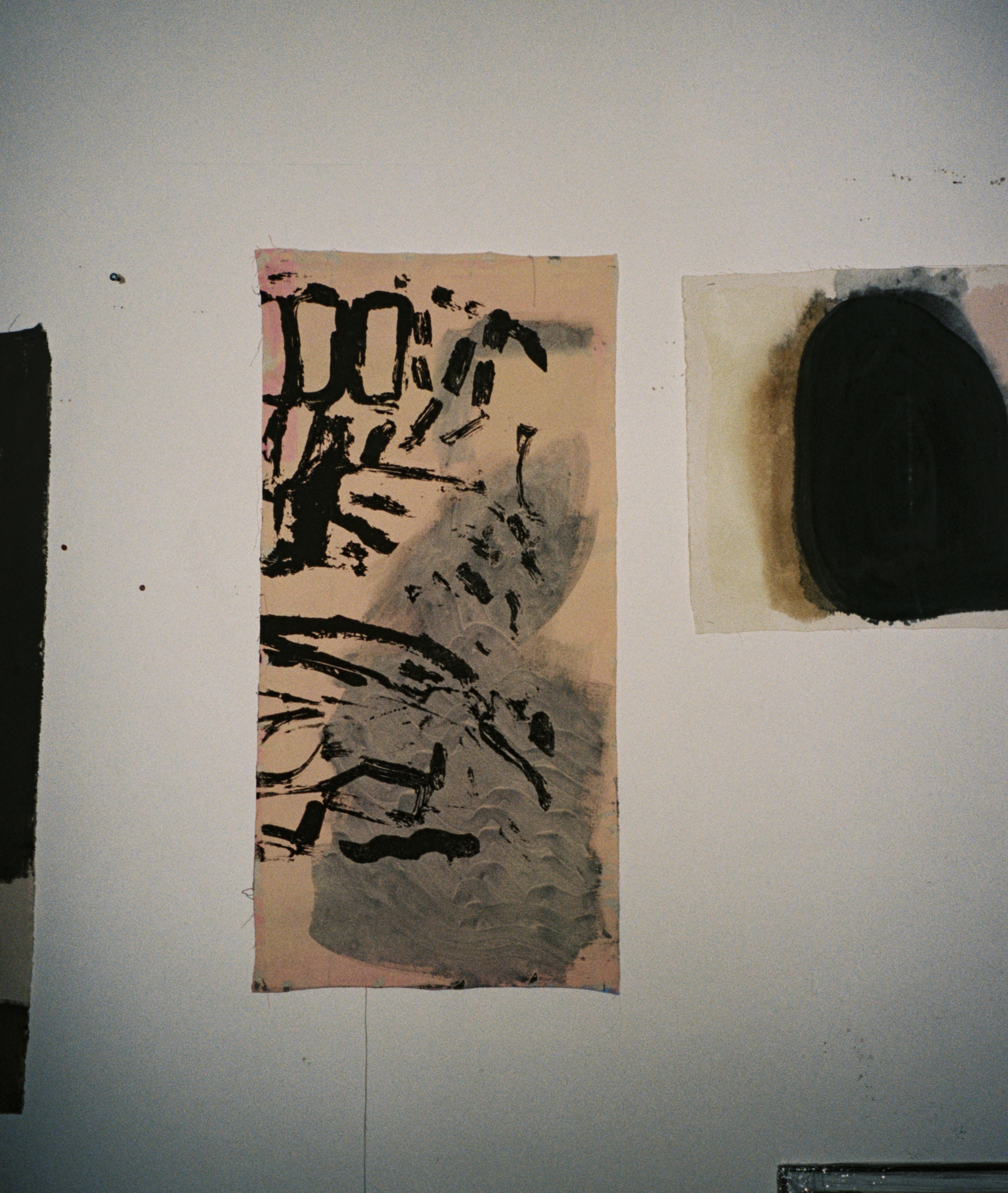
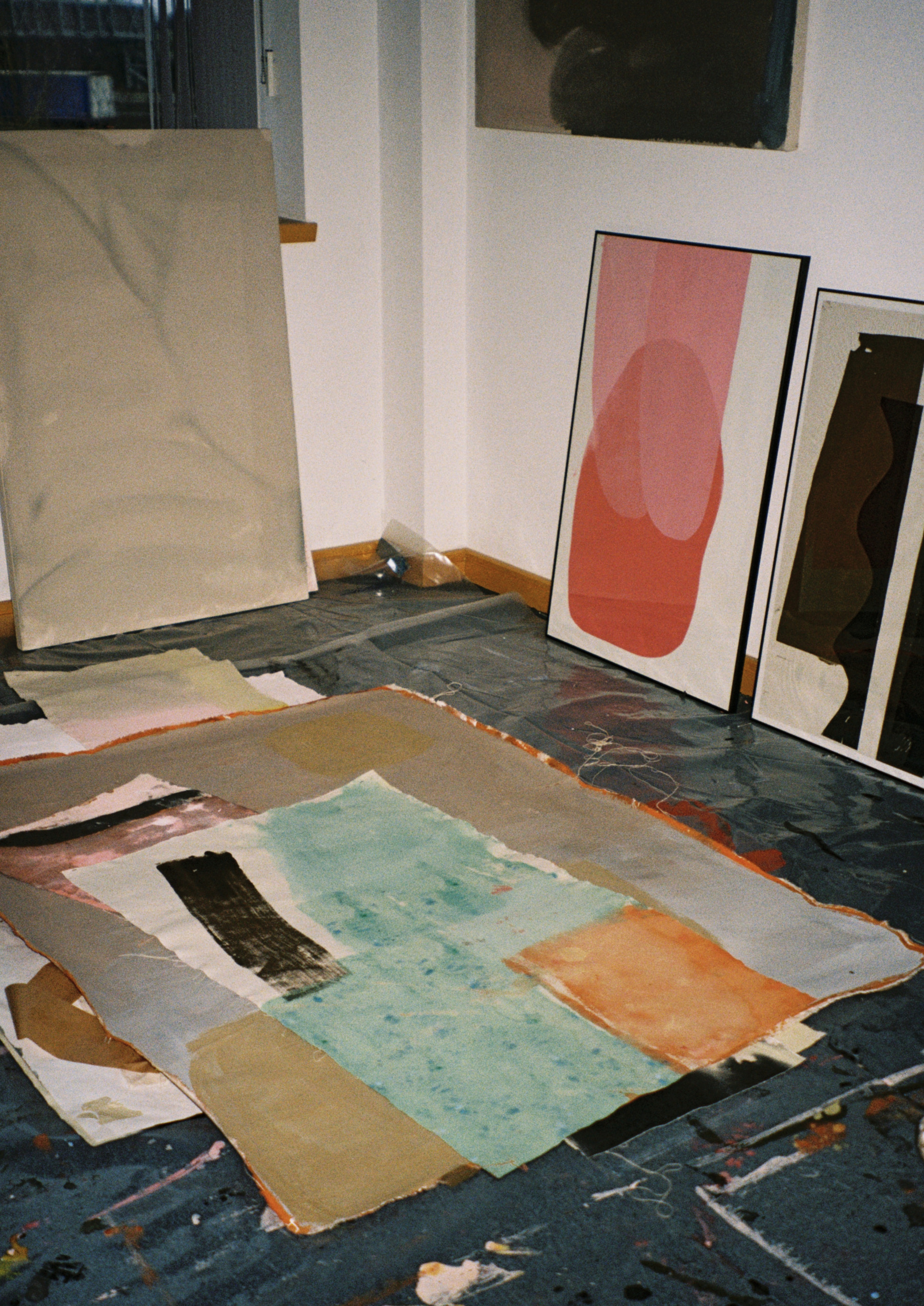
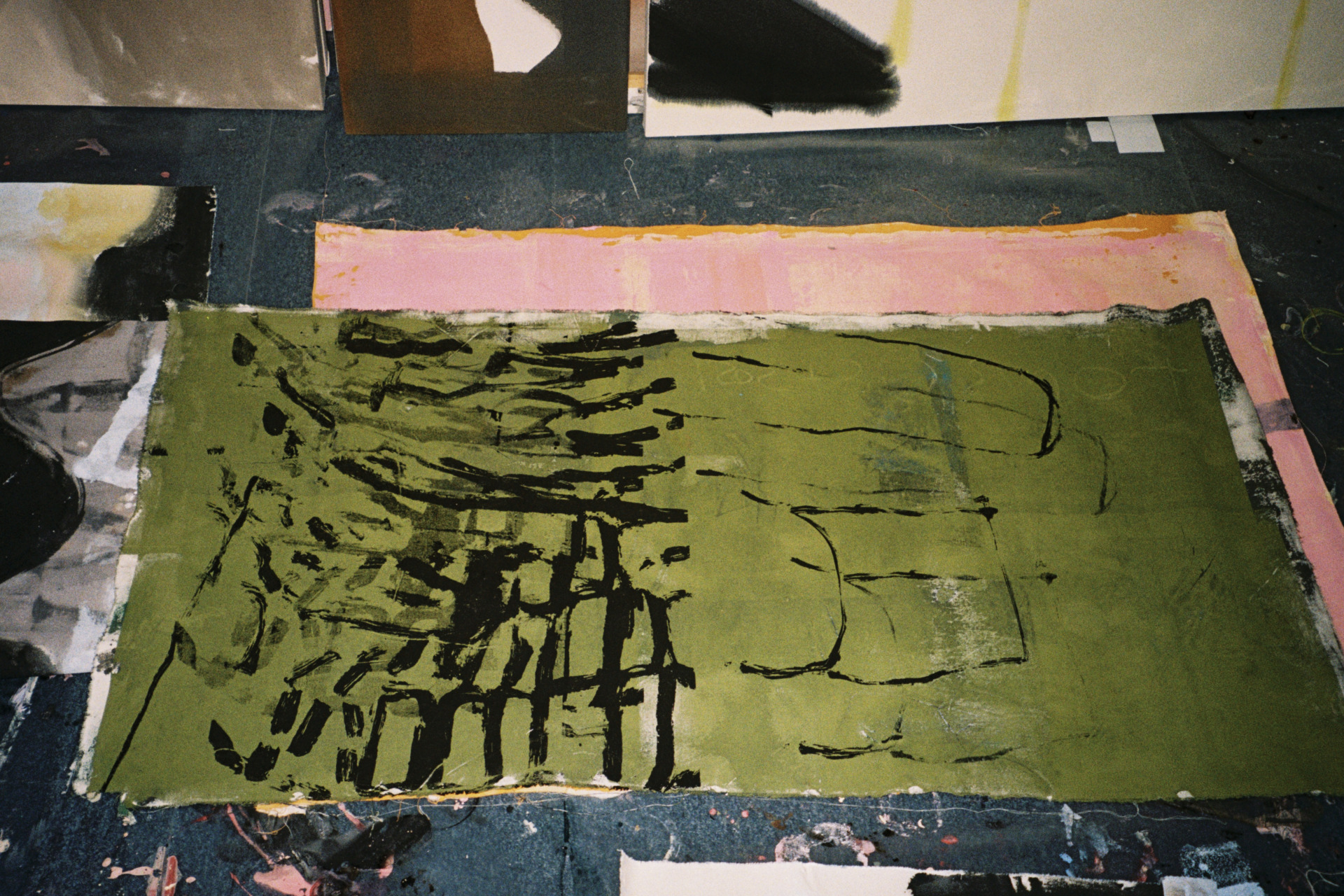
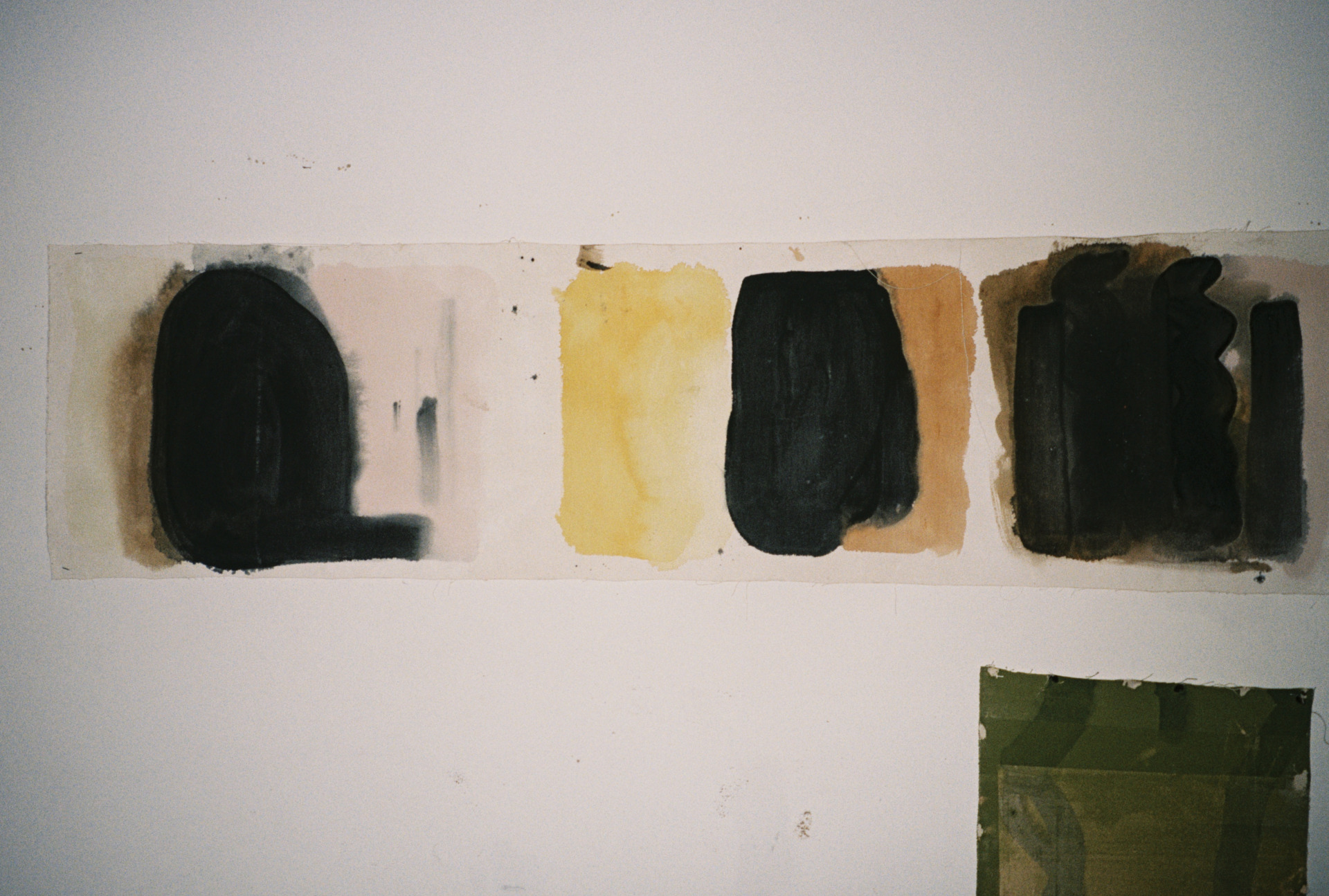
I tend to work in series just because it makes sense and I like to repeat stuff. I’m working stuff out through doing things repetitively. In my most recent series of paintings, I’m using unprimed canvas and working with this very soft edge that I’m getting from unprimed canvas. I’ve got a very tall stretched canvas that’s dry and soaking liquid up, and I’ve got very watery paint, and I think about what’s happening there and how fast I need to work it. I’m learning through the process, and I’m making mistakes. Some of them are beautiful, and some of them aren’t, and some of them are interesting, and some of them aren’t. I’m making a whole series through that action, and I’ve got a whole load of bits of canvas that need reworking. It’s kind of like recycling these pieces and it’ll hold together as a series. Different things might influence what I approach a series as and it’s normally practical things like what I have or need to use up. Colours I choose will be paint that needs to be used up rather than this desire to use a specific colour. But then sometimes, I’ll mix using paint up being like, oh, this needs a really punchy yellow to offset it – I think I tend to work in series in that way. Even the Two Step work that I do with my friend Fraser, I think one of the strengths of that initial body of work that we did over a few years is that we always use the same size paper, which makes the work quite recognisable. And the works vary a lot in the content that goes in them. Some are really soft and just a single colour, and some are really heavy with lots of detail and information. But the fact that they’re all on the same size paper or screen prints means there’s a uniform to them, and they’re a series. I think it’s just, like, an easy way to make your work kind of hang together a bit.
Going on to Two Step, can you tell me a bit more about that collaboration and how it came to be?
So me and Fraser met while both doing residencies at the House for an Art Lover. I did the residency before I worked there. It’s a spot that really helped me develop my practice and career in a lot of ways. I got the opportunity to do a residency. I was doing quite a bit of engagement through that residency. I was inviting people in and listening to their dreams and making work from their dreams, and then Fraser had a troop of dancers in from Chicago. He was looking at the intersection between dance and art and all these repeated motifs and movements through the different processes they use. I think we kept catching each other’s eye across the courtyard and there was this recognition of a certain way of using line. We recognised that we were working with other people and creating space to work with people rather than just having this space with you and your work, which might be more insular. We met there, and then kept bumping into each other.
At the time, I did a project that was in the subway stations in Glasgow International (2018). I did that with my friend, Alex. Fraser gets the subway, so he kept seeing all my work. That was a good way to ram yourself down someone’s throat. He proposed that we do something together. I felt quite privileged that he would invite me to work with him because he’s a really well-established artist with this amazing history of projects and shows. I think that was why it worked in some ways because I had a lot of respect for him and he was open to working with me. There was a good level for collaborating. We respect one another really nicely. We just got in the print studio and, on his suggestion, we started screen printing. It was a wee bit awkward at first. We had to work a few things out. And then it was just amazing because we developed this weird collaborative screen printing language, which is really unusual. I don’t think people normally work together like that in a print studio. I learned so much from working with him about pace and how you decide what’s a yes or no, what’s that filter for deciding your work or not? Fraser and I would do it really fast and not overthink it. We’d hold the prints up at the end for each other, and we’d just be like, yeah, yeah, no, no, yeah, and just put them in two piles, and then the no pile just got printed on again, and then the yes pile was the work.
Fraser is so confident and assured about his decision making that when we’re putting on shows, he’d be like, let’s put that there and there, and I’d be like, oh, you know, hang on, let’s try this, you know? And then he’d be like, yep, great, love it, and I’m like, are we done? You know? It’s so assured. Taking that forward into assessing my own work or hanging shows or writing, whatever it is, I learned to not be too self conscious about making decisions about things because if you get it wrong, it doesn’t matter.
What limitations, if any, do you face being a full time artist and cultural worker?
Well, I’m always skint. That’s the limitation. It can be quite stressful. I think the pressures of always having to worry about money is quite inhibiting creatively. I would love to be able to just have a steady income. There are countries where they give artist grants just to work and something like that would be really amazing, which is why this commercial gallery thing seems so important to me right now. I just feel like I need somebody else to help me out a bit with that aspect, which is in a way what we’re trying to do with Shapeero Murray as well. I think that’s a major concern with a lot of artists. I mean, are there limitations? I mean, honestly, it’s the opposite of being limited, being an artist. You can kind of do whatever you want, and I guess that scope is sometimes a bit disorientating. And I think something I’ve got better at as I’ve gained more experience is understanding how to organise myself within that scope and not be too disorientated by it. There’s some feeling that if you get an opportunity, you have to go for it. I would love to be a bit more picky sometimes, but I don’t think I really have the confidence to do that yet or the assuredness in knowing that something else bigger will come. Or if you turn down something that’s decent money, is that money gonna come from somewhere else? Or you could get another opportunity? Hopefully, where I’m heading is into a place where I can be a little bit more selective and not feel like I have to do everything all the time and work really hard all the time. But I think it’s a real privilege and a blessing to be an artist.
How do you approach your curatorial work with Shapeero Murray? How did that collective come together, and how does that differentiate from the way that you approach your personal practice?
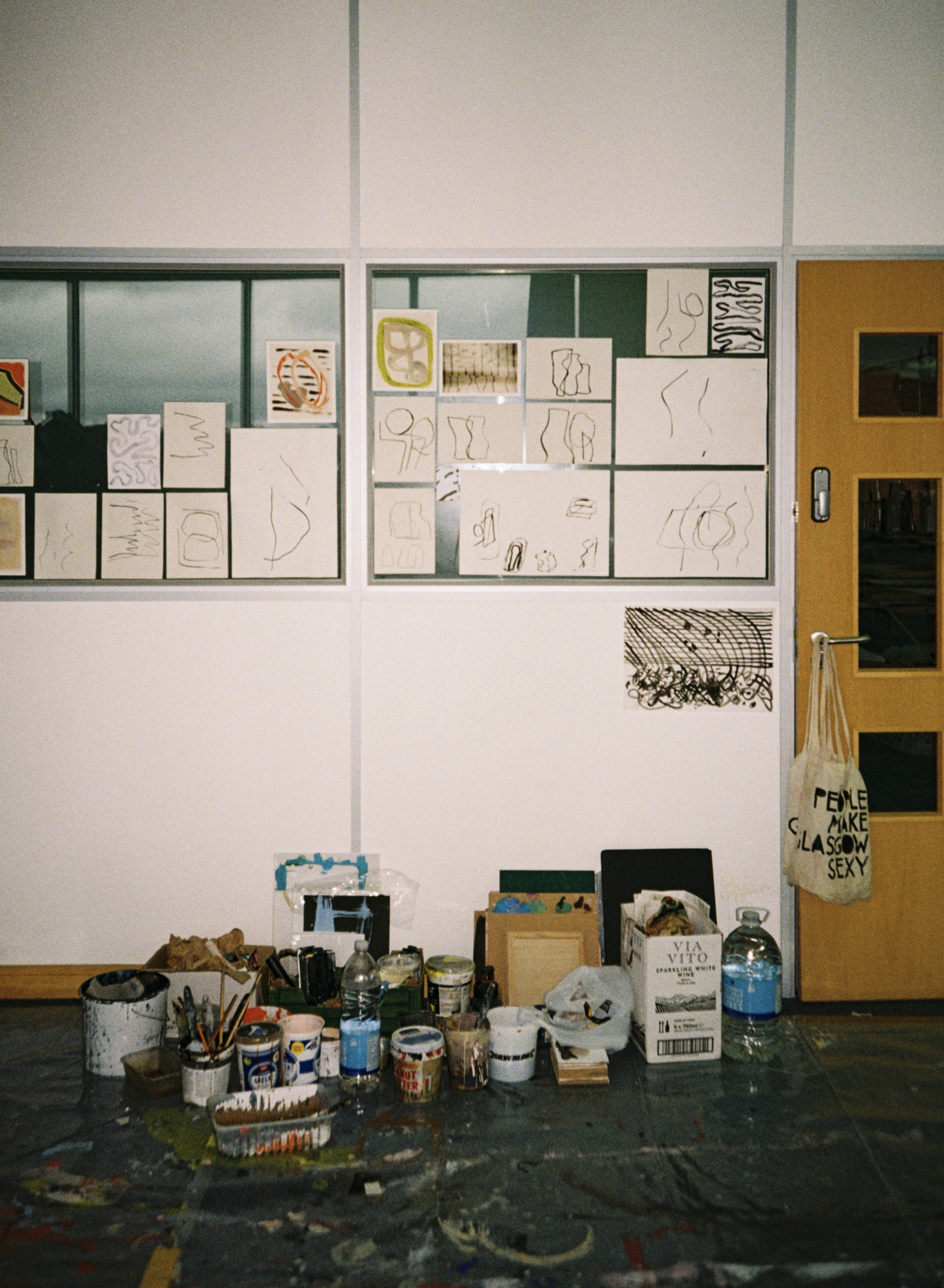
So I work with the beautiful Andy Murray on that. He’s such a sweetheart, and he approached me actually wanting to do something energetic with art. He’s got a lot of energy and generosity for community and putting on fun and exciting stuff. He wanted to put on shows, and he approached me, and I was kinda like, alright. Where I’m stuck at the moment, I’ve got a few years on him in this game, and I’ve done the putting on shows thing for a long time in different guises. I was at a point where what I really needed was steadiness and income, and was wondering if there’s some way that we can do both of those things, like, put on shows and bring in some income for ourselves, but also for artists. And it feels like we’re in a really difficult global position. We’re in a really difficult funding position. Those things don’t look like they’re gonna change. I’ve been really lucky to have support from Creative Scotland for various projects over the last few years, which has kind of kept me going and and, you know, get snippets of income from other places. But the more pressure and the more competition, more people that are going to Creative Scotland, it just feels like it’s getting harder and harder to make that work and to live off. I’ve just been thinking, can we find that income somewhere else rather than everyone relying on Creative Scotland? There’s a lot of rich people and there’s a lot of amazing work and talent in Glasgow. Finding people to buy work rather than people just getting generic prints for their homes. It just feels like this really missed opportunity. And there’s a reason it’s missed, and it’s because it’s really hard. We were like, let’s give it a whirl. We have, really luckily, similar taste in what we find exciting about artists, and we’re drawn to similar works. We’re trying to do something that allows artists to be experimental and allows work to be itself and gives our artists opportunity, but also crosses the line of somebody actually wanting to buy this or to own it, which is a really beautiful thing as well.
I think we need to get over selling work as being this dirty thing or this over commercialised thing. It’s really sad to have studios full of artwork that no one ever sees, and somebody can have something in their home that they see every day that is a beautiful talking point for every time they have people around, their kids can grow up with that in the house, which is a lovely thing to gently ponder when you’re growing up. I think it’s a really good thing to try and fight for; more people owning work and owning real artwork of people in their home city. We’re working with a bunch of artists that we think make gorgeous work and most of them are significantly underrepresented in Glasgow. We work with a few people that are a bit better known and do get shows, and it’s the trying to keep balance of artwork that is experimental and might never sell and artwork that actually might sell, which helps support the gallery and what we do and the artist. I think the thing that’s nice about it is our individual practices are quite solitary, and having these collaborations with Fraser and Andy, I think they’re really important. I need to connect with people. Andy and I are having really interesting conversations. Every time we meet up, we’re connecting with artists. Selling an artist’s work for them is a fucking great feeling when you can email an artist and be like, hey, I’m just sending you £500 because we sold the work. You know how much that’ll mean to that artist that’s probably working a minimum wage job for three days a week. It’s not just the money. It’s the confidence they get from being like, oh, I sold something. It legitimises it in a way.
How do you go about selling your own work? Where do you find time to do that? And we’ve talked before about the comfort or discomfort around having to put yourself out there in that way or trying to advertise work that you’ve made and convince someone else to get it, like, being able to make money off of your practice is kind of essential when you’re a full time artist. So how do you navigate that process when you’re having to do it for yourself?
I guess there’s a few different streams. Patricia Fleming’s Art Car Boot Sale introduced me to selling my work. Previously, I’d only sell bits and bobs here and there; nothing really to write home about, and then I started doing the Art Car Boot Sale, and I started making real money from it. I don’t find it easy to sell my work myself off my website or Instagram. It’s something I know I could be better at, and I’ll probably put time into that when I have the moment. I try to post plenty of stuff. Occasionally, people will get in touch with me just directly through Instagram, although it doesn’t happen that often. Shapeero Murray is another platform. One of the reasons we set that up was to have this easier platform to sell work, which is for ourselves as well as the other artists. It’s easier to sell even though the veneer of the gallery is us because there’s less vulnerability in it. It’s kind of bits and bobs here and there, but it’s not easy. It’s kind of scary, but I think it’s one of those, the more you do it, the easier it gets.
I’m interested in the vulnerability aspect that you mentioned. Because your work is conceptual, how do you feel the vulnerability presents itself?
I think the more vulnerable the work is, the more successful it is in a lot of respects. I think the more you’re putting something out there that you’re like, oh, this is maybe showing something that’s a little bit weird or uneasy, but maybe it’s kind of reflective of me. I think people really connect with that. I think the more vulnerable you can be in your work, the more likely you are to have real connection, but it still can be hard. I think I’m getting a tougher skin, you know, over the years. I’m not really scared of putting work out there anymore, and I’m not scared of it failing or people not liking it, and I think that’s one of the beautiful things that comes with getting older is you care less about what people think.
There’s a couple of galleries that I’ve started working with in the past year. They’re just like people that are trying to do something they really care about and love. They’re not doing it because of any other agenda. They love art and want to share it and see gaps. They’re putting all this work into showing my work and it’s quite thankless, I think, being an art organiser or a curator, you’re doing all the work to show someone else’s work. It’s not even about your work. I think it’s quite hard to understand as an artist or even as a non-artist that galleries are taking a massive cut, like 50%, and you think it’s a bit unfair or it seems like a lot, but actually when you realise the amount of work the gallery has to put in, there’s a lot of costs involved. It’s a hell of a lot of work. I think doing Shapeero Murray made me realise how much other galleries are putting on the line just to show my work. So I really appreciate it. That helps. And then the more of that assistance you get, the easier it is to be vulnerable.
___
In the Studio is a new monthly series interviewing Scotland-based artists and curators in their studios, conducted by Chaz Scott, a curator and art historian based between Baltimore, Maryland and Glasgow, Scotland.