
s_c_u_l_p_t_u_r_e
Elisabeth Molin and Kate V Robertson
Patricia Fleming Gallery

Installation view, all works Elisabeth Molin, s_c_u_l_p_t_u_r_e, Elisabeth Molin and Kate V Robertson, Patricia Fleming Gallery, 2025

Elisabeth Molin, While We Sleep, Sharks Swim Between Your Ear and Mine, 2024

Elisabeth Molin, While We Sleep, Sharks Swim Between Your Ear and Mine, mixed media, 2024
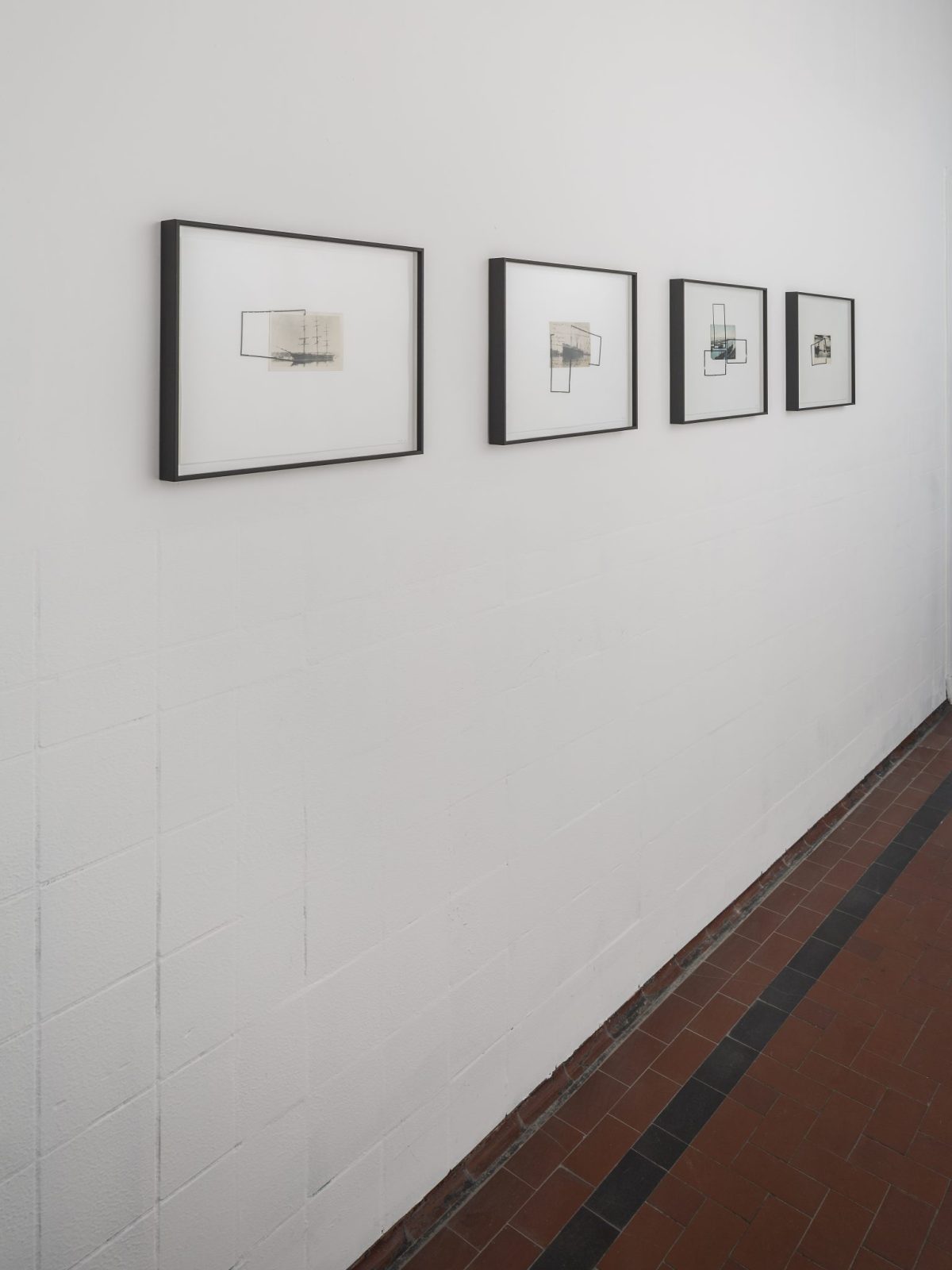
Installation view, all works Kate V Robertson, s_c_u_l_p_t_u_r_e, Elisabeth Molin and Kate V Robertson, Patricia Fleming Gallery, 2025
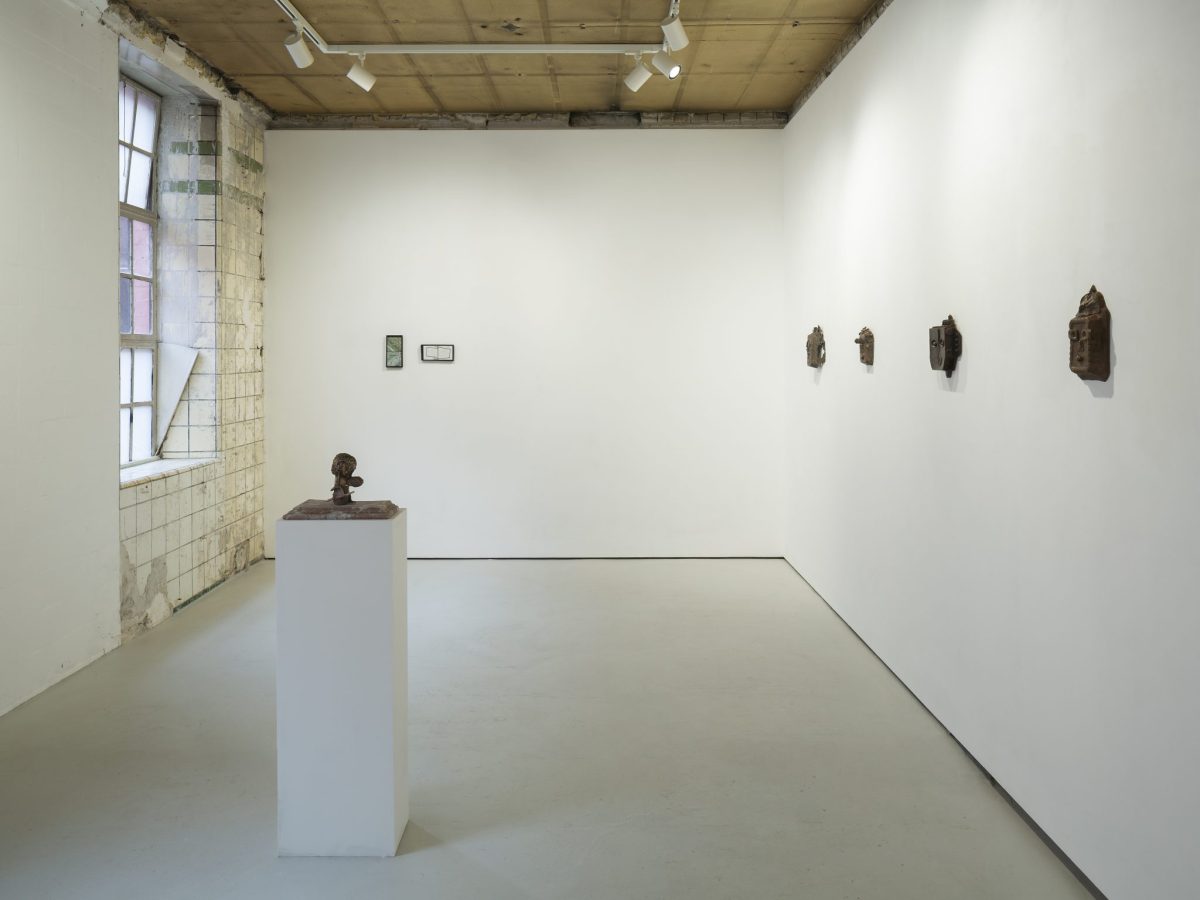
Installation view, s_c_u_l_p_t_u_r_e, Elisabeth Molin and Kate V Robertson, Patricia Fleming Gallery, 2025

Kate V Robertson, Adonis, Bronze, 2024
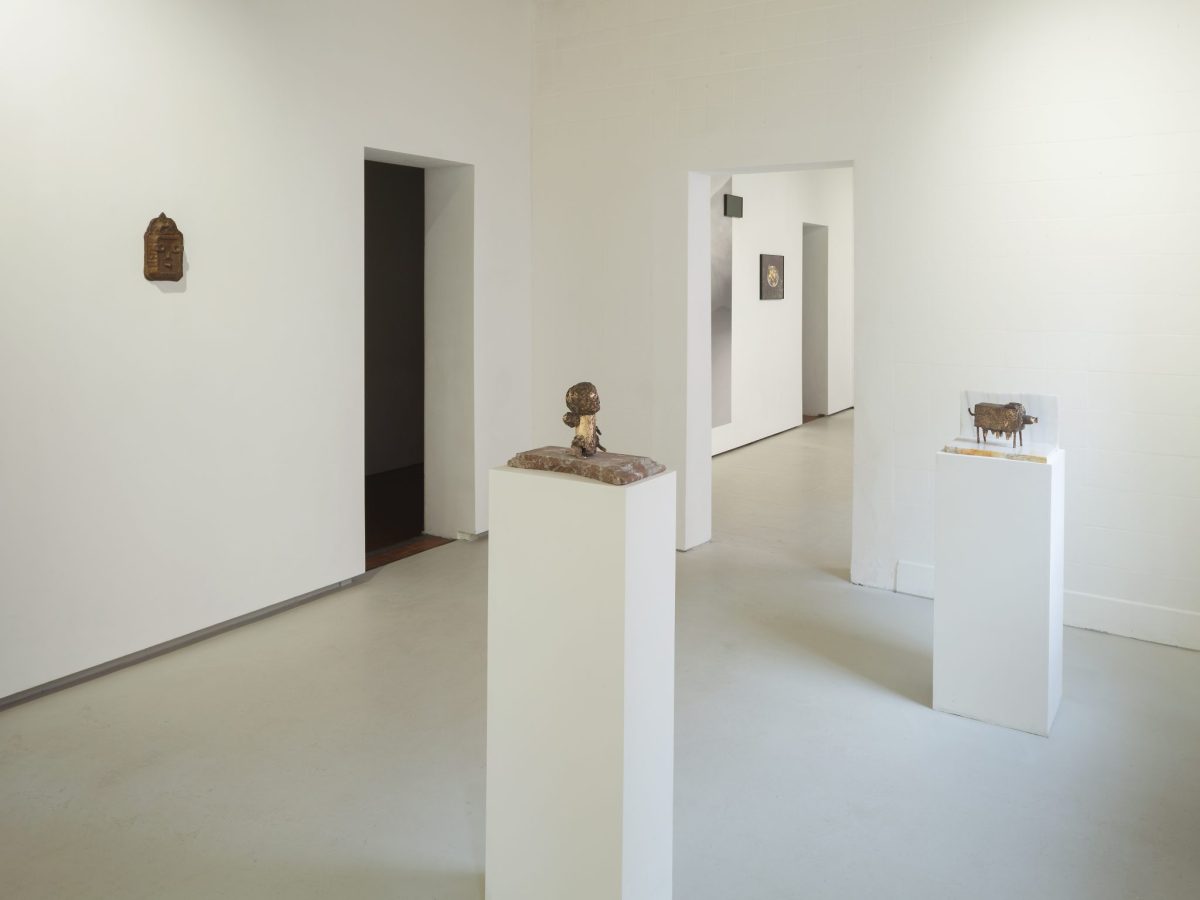
Installation view, s_c_u_l_p_t_u_r_e, Elisabeth Molin and Kate V Robertson, Patricia Fleming Gallery, 2025
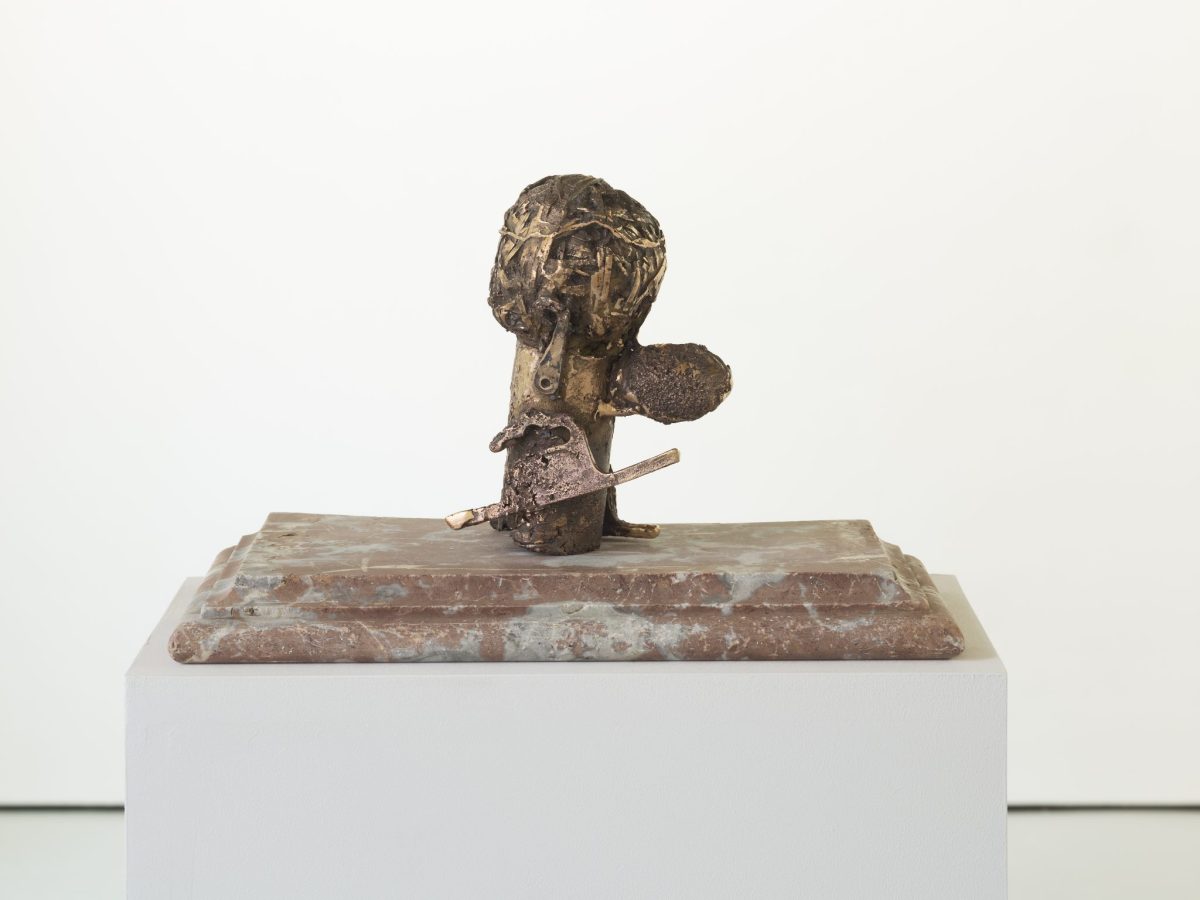
Kate V Robertson, Atlas, Bronze with marble base, 2024

Installation view, all works Elisabeth Molin, s_c_u_l_p_t_u_r_e, Elisabeth Molin and Kate V Robertson, Patricia Fleming Gallery, 2025

Installation view, all works Elisabeth Molin, s_c_u_l_p_t_u_r_e, Elisabeth Molin and Kate V Robertson, Patricia Fleming Gallery, 2025

Elisabeth Molin, Dreams That Make You Sea Sick, HD Video on monitor, cardboard box, 2022
s_c_u_l_p_t_u_r_e
Elisabeth Molin and Kate V Robertson
12.04 – 24.05.25
Patricia Fleming Gallery
In the liquidity of our present.
Sculpture implies multidimensionality. One can encounter a sculpture in the round, engaging with an object—a material thing that can be seen and experienced—through more than one plane or flexible point of view. Elisabeth Molin and Kate V Robertson each have a sculptural bent to their respective practices. Emerging through processes of material juxtaposition, Molin and Robertson’s artworks challenge typical understandings of sculpture as solidified physical things, reforming fragments from life materially to allow histories, social and cultural perspectives to become porous and experiential. s_c_u_l_p_t_u_r_e accentuates into this fluidity. Alongside three-dimensional artworks, in this exhibition photographs and prints, wall reliefs and collages reside besides one another creating a tab-like perspective—a way of viewing akin to the presentation of the world through a digital screen.
Molin’s practice is rooted in the photographic. Rather than a flat presentation or recording, her interest lies in the distance between the image of a thing and the thing as it exists in the world; how and why this space comes into being. Artworks such as While we sleep sharks swim between your ear and mine (2024) make this gap leaky. Building on her ongoing interest in image ecologies, and digital infrastructures for viewership, the compartmentalised installation questions the omnipresent proliferation of LCD screens in contemporary life; how these flat surfaces have come to mediate our human relations. Bringing together disparate materials—parts from display screens, polarizer film, silicone putty and seashells—While we sleep sharks swim… transforms the place in which it is installed—here a fully titled room, a former shower block once belonging to Glasgow’s police force—creating three dimensional image of sorts. Now inhabitable, the installation positions us as active readers. And as we meander through the installation, noticing subtle material echoes—the reappearance of objects from the sea for example—we become more and more twinned in the liquid world Molin reimagines spatially. This level of bodily experience accentuates the innate interdependencies of life—how a life is always more than a flatly rendered thing—critically alluding to the superstructural forces that compress life’s porosity through means of manufacture and material regulation.
For Robertson sculpture acts as a lens; object forms become devices which allow her to cast multiple associative connotations. Often toying with tension and illusion, histories, technological systems and the effect of these on earthly life, her artworks act as two-faced conversationalists each toying with the ‘truthful’ fabrication of our worldly condition. In her recent series of bronze idols—Adonis; Atlas; Medusa; Phaea (2024); Athena, and Dionysus (2025)—Robertson focuses her lens on acts of communication; specifically how human experiences gain value and mythos, have been preserved and how they are passed from one generation to the next. Cast to recall artifacts of antiquity, these sculptural reliefs literally transform household detritus—tinfoil containers, bottle tops, cardboard and clothing labels—into quasi-mythological entities. At once a reference to the legacy of post industrial cities across the world, Robertson’s punkbody pantheon questions logics of preservation and value, materially undermining the weighty sheen often given to aspects of the past (to aspects of the present also), recasting these systems of thought as something utterly arbitrary. More than just a coy jab at the face of power, this series contains deeper allusions. From an ecological perspective, these forms remind us that the plastic waste of today will still be here in millennia to come, perhaps becoming allusive material indicative of our societal neglect and fall.
s_c_u_l_p_t_u_r_e is a meeting point between two artistic practices. Both Molin and Robertson question the nature of our human condition, individually and together they challenge our base associations with the materials that make up our world. Each of their artworks asks us to think, to think and to think again, about what it is that rests before us, leading us on a multidimensional journey into the liquidity of our present.
Elisabeth Molin’s practice has its roots in photography but veers into other forms or seeks to embody photography in different ways. This can take the shape of sculpture or performance, video or in texts, each of which explore the materialities surrounding image production. Based between London and Copenhagen she studied at Chelsea College of Art and Royal College of Art in London. Her artworks have been presented at KW Institute, Berlin; Wiels, Brussels; No Show Space, London; PUBLICS, Finland; Sixty Eight Institute, Copenhagen; ISCP, New York and Columbia College, New York amongst others.
Kate V Robertson works in sculpture, installation and print. With a focus on materials and processes, she often employs a minimally surreal visual language creating artworks that push representational systems of technology, advertising and print media to their dysfunctional edge. Robertson lives and works in Glasgow. She gained undergraduate and postgraduate degrees from Glasgow School of Art. She has exhibited nationally and internationally, including exhibitions as part of Glasgow International, at Dundee Contemporary Arts Baltic 39, David Dale Gallery and at venues in Germany, France and Austria. She is represented by Patricia Fleming Gallery.
Photo credit: Keith Hunter