
Featured Exhibitions
Wound Duty
Alice Brooke
Mitchell Library
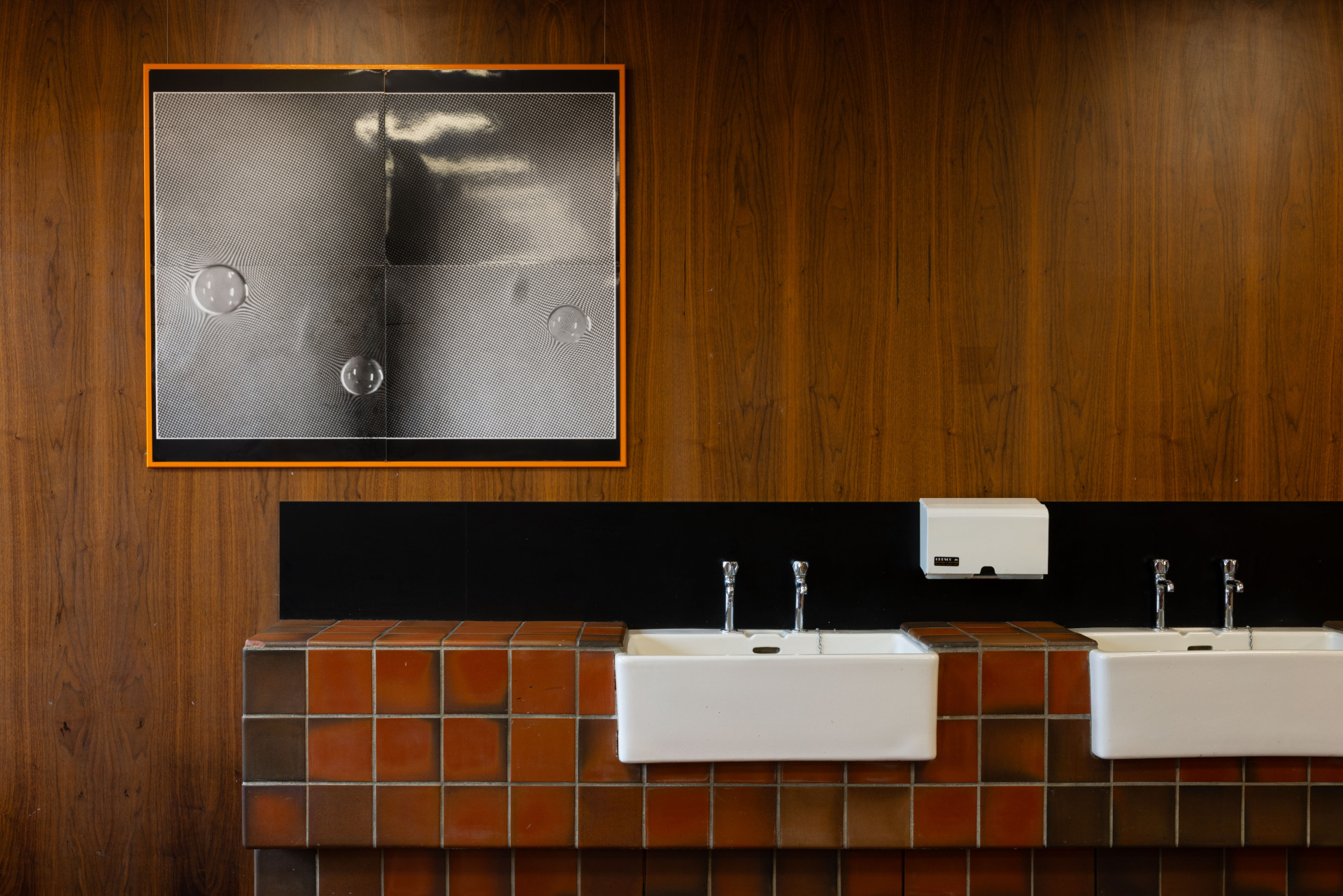
Untitled, 2026, Silver gelatin photograph, 101.5 x 122 cm

Flesh sight: Dark Energy Spectroscopic Instrument (DESI) map of the universe, 2026, Silver gelatin photograph, 40.6 x 30.5 cm
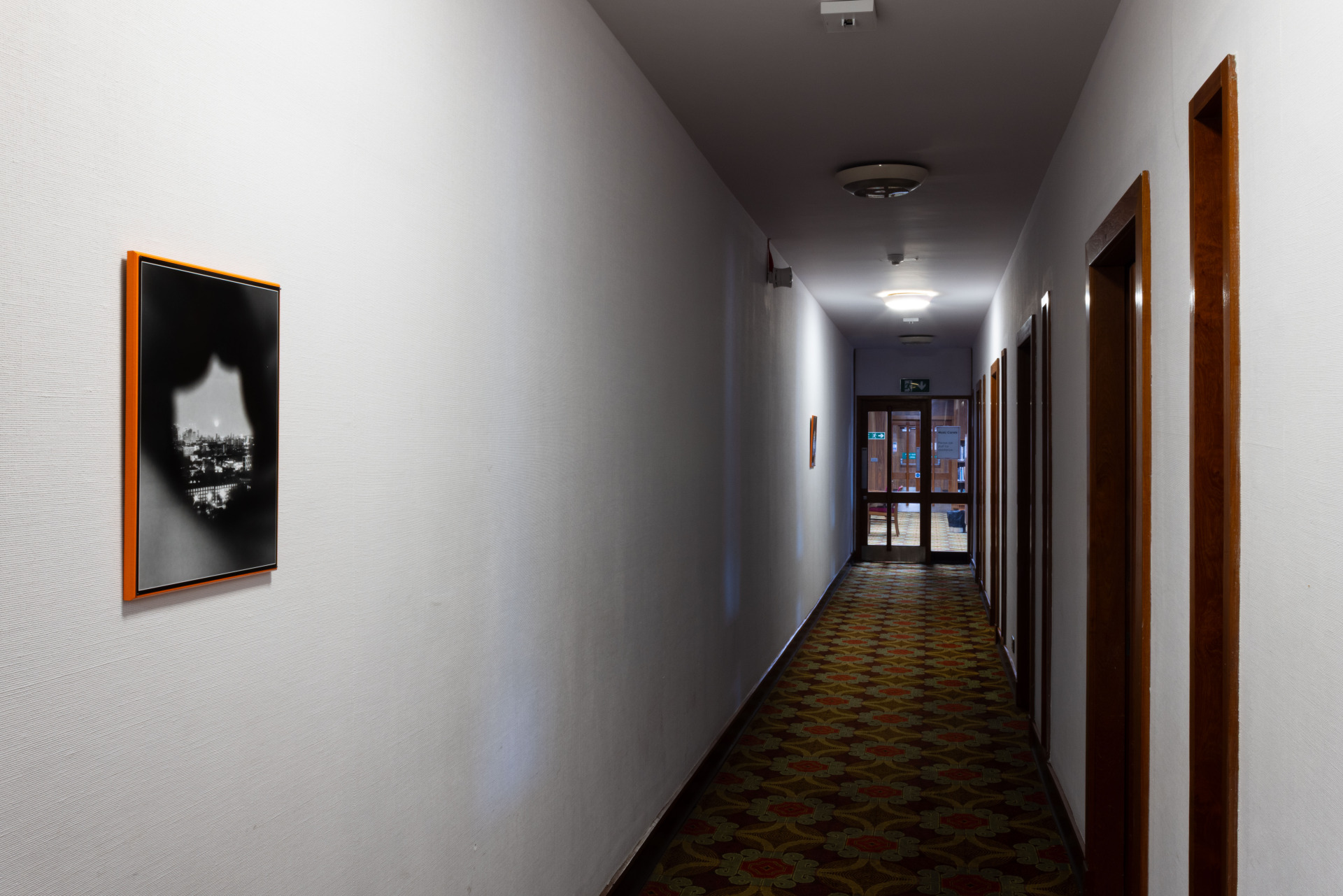
Flesh sight: Worm Moon, 2026, Silver gelatin photograph, 40.6 x 30.5cm
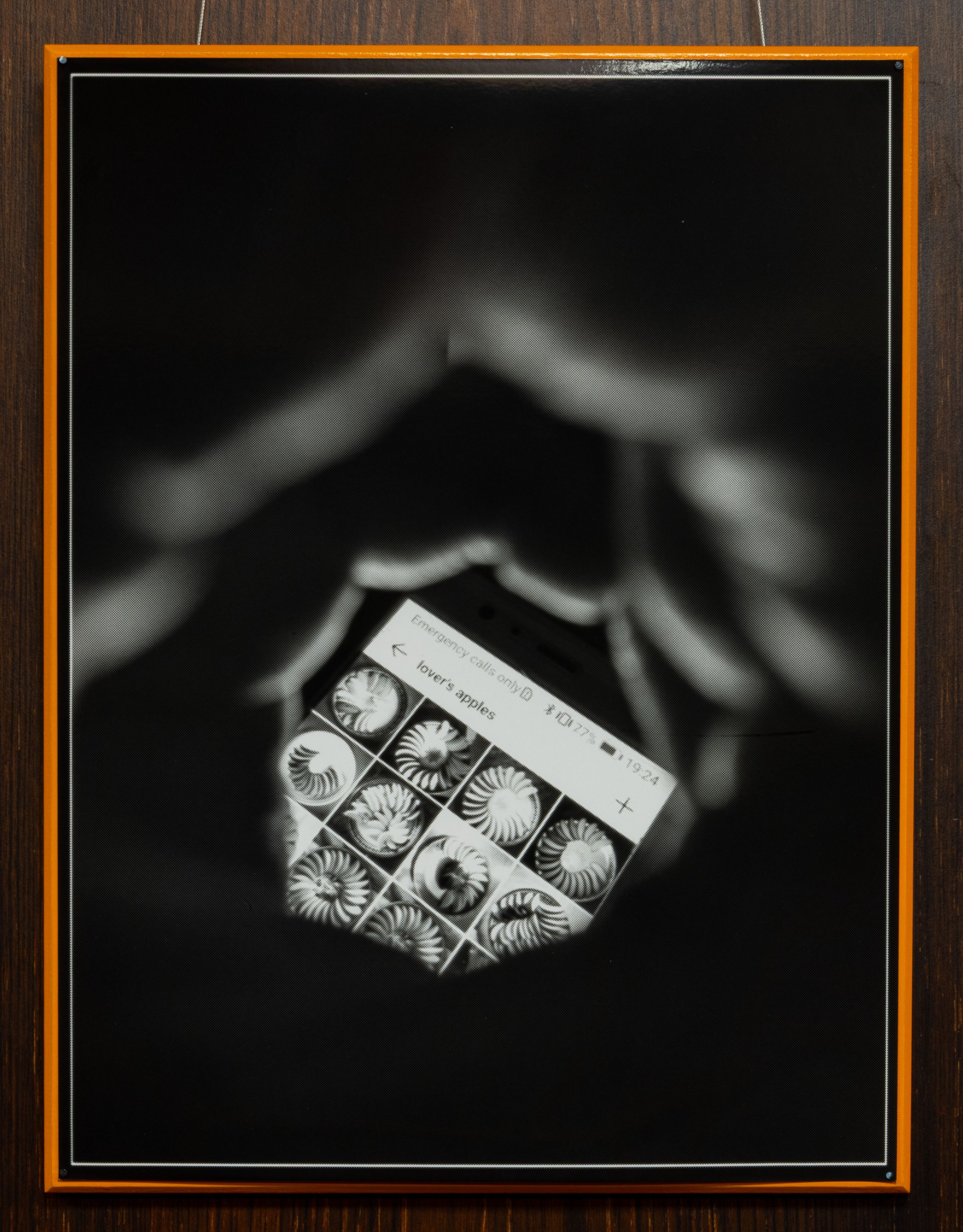
Flesh sight: Huawei P20 Pro, 2026, Silver gelatin photograph, 40.6 x 30.5 cm
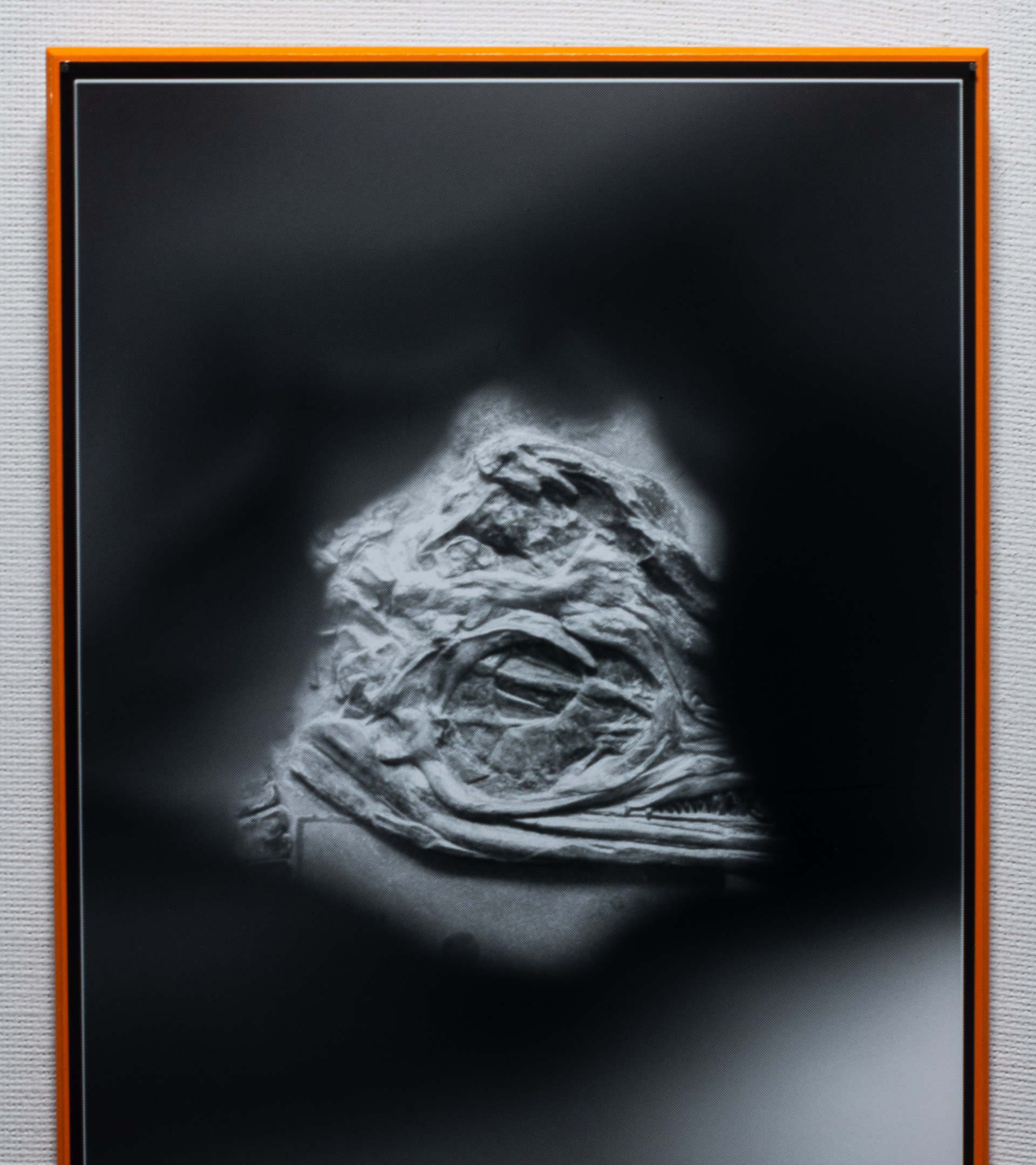
Flesh sight: Ichthyosaur fossil, 2026, Silver gelatin photograph, 40.6 x 30.5cm
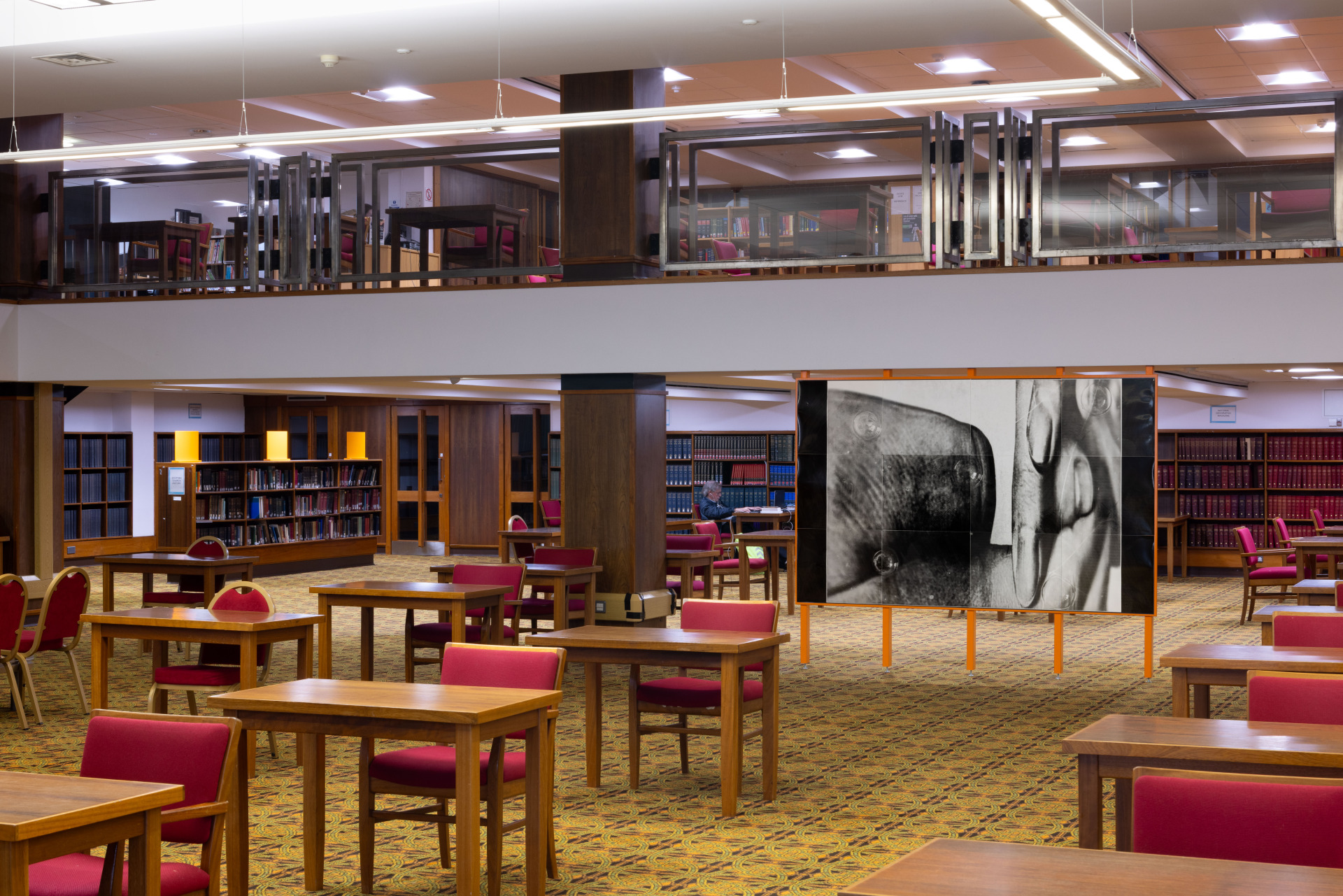
More, fool me, 2026, Silver gelatin photograph, 152 x 244 cm
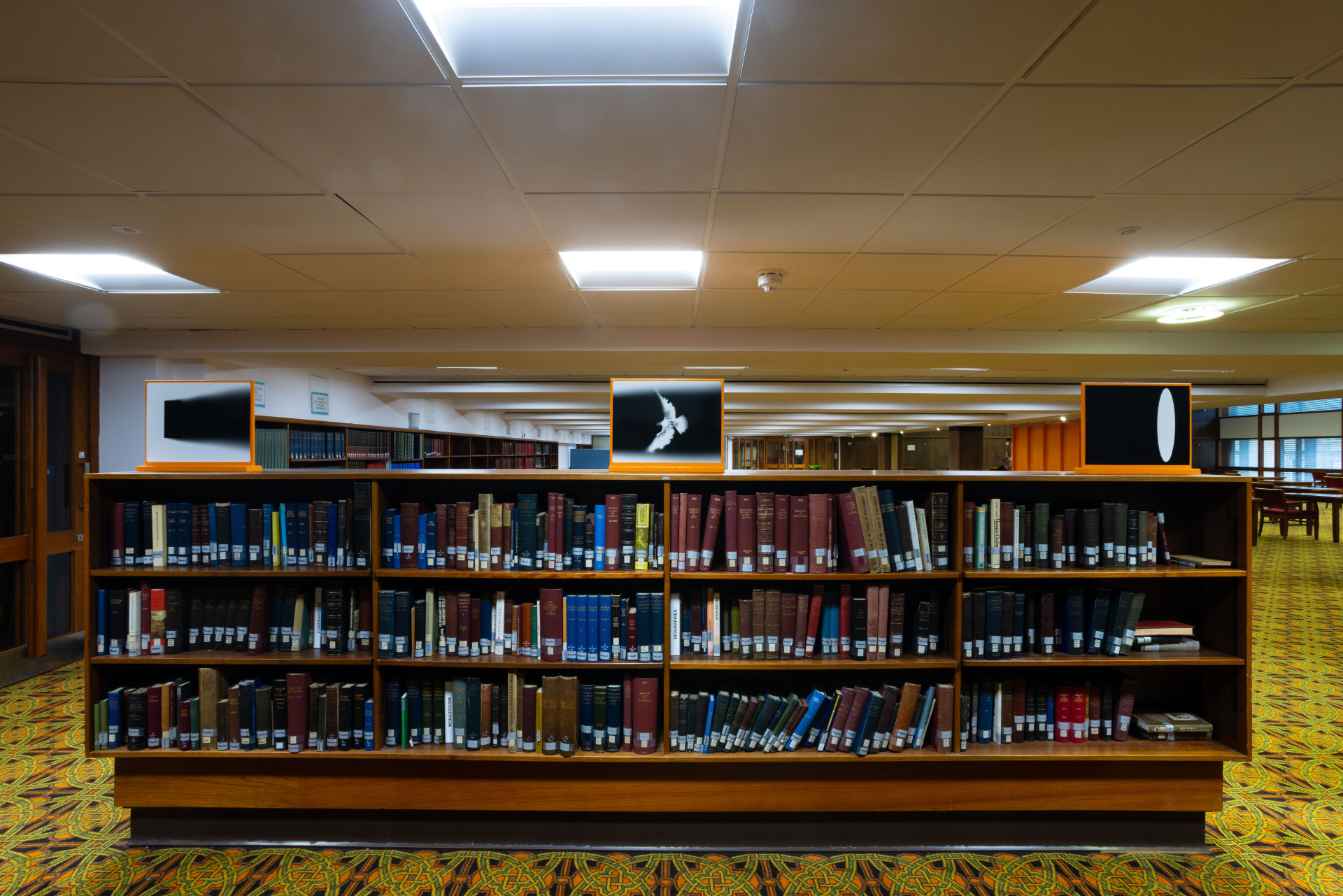
Focus, 2026, Silver gelatin photogram, 30.5 x 40.6 cm
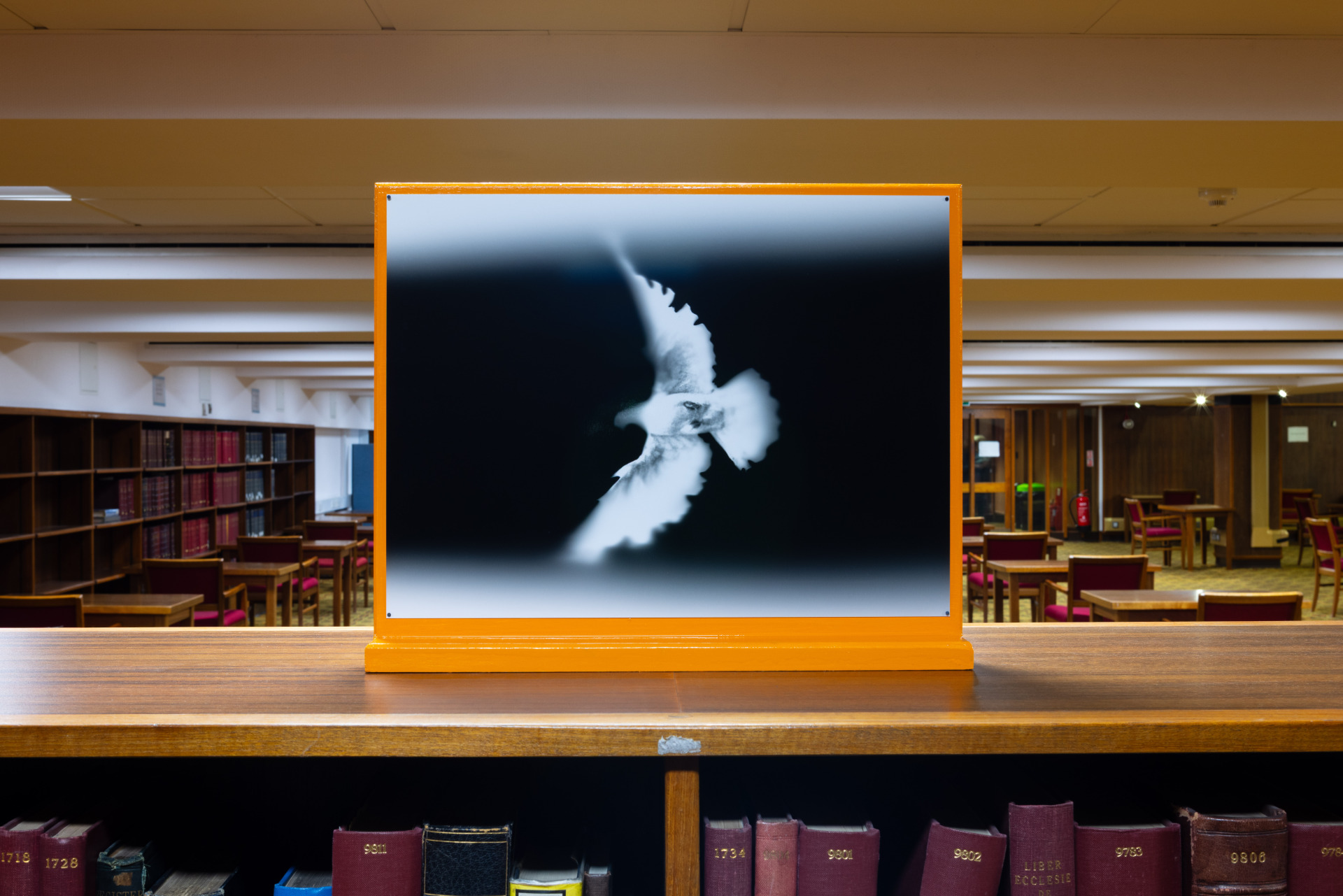
Focus [detail], 2026, Silver gelatin photogram, 30.5 x 40.6 cm
Wound Duty
Alice Brooke
Mitchell Library
05.06 – 18.07.2026
In one of its earliest forms, the Latin word ‘focus’ meant hearth or fireplace, and figuratively, home and family. By the 17th century, it was a mathematical term signifying a point of convergence, and later a technological term in optics and photography that also denoted concentrated attention. Drawing from this history, Alice Brooke’s exhibition Wound Duty takes as its subject and medium the dominant object of hyperfocus today: the smartphone.
Using analogue processes, Brooke’s silver gelatin prints are the product of the digital smartphone’s capacity to document, distribute, and illuminate – though not always on the user’s terms. In the darkroom, Brooke placed her phone into a photographic enlarger, substituting the mechanism of both the analogue negative and the exposing bulb. The light from the LCD screen passes through the enlarger’s lens, projecting digital image onto light-sensitive photographic paper. Each print is unique. The screen’s levelling display, revealed and pulled through a slow, physical, and unpredictable chemistry. Silver gelatin does not discard a surplus of light the way a digital screen does. Instead, it holds on to light, grain, blur and the residue of contact that might otherwise be digitally smoothed over, autocorrected out of sight.
In this unreasonable misuse of smartphone technology, Wound Duty deforms the digital convenience of an immediate snapshot into an unwieldy analogue process that slowly reveals how the smartphone functions as both a portal and a wound. The technology and the media that the phone demands of its users invite self-surveillance and self-discipline, where one’s autonomy is folded into systems
designed for capital accumulation. This compulsion to document, perform, and present echoes a logic of self-flagellation: a devotional practice that has displaced older spiritual acts, as technology assumes the scale and authority once attributed to the divine.
A wound is a rupture in the body’s boundary. In a long tradition of religious and artistic imagery, it is also a threshold through which something passes in both directions. Brooke observes how the smartphone inhabits a similar paradox: a device that organises solidarity, carries grief across distance, sustains movements, circulates art beyond the gatekeepers who once controlled it. ‘Duty’ carries weight here: the obligation a user feels toward the device, the toll it extracts. What capital has learned to exploit is something older than the phone: the gap between what the body can hold and what the mind can reach. We are creatures of limited material perception: skin, eye, the reach of an arm, capable of imagining scales that exceed any bodily comprehension. The screen presents all of this on equal terms: the intimate and the planetary, the local and the unimaginably remote, within the same luminous rectangle. This flattening abstracts us from the material conditions of what we are seeing, the distances, the labour, the consequences, and from our capacity to locate ourselves within it. Focus, in both its senses, becomes harder to maintain. The hearth is everywhere and nowhere.
Photo credit: Alice Brooke